This is default featured slide 1 title

Go to Blogger edit html and find these sentences.Now replace these sentences with your own descriptions.This theme is Bloggerized by Lasantha Bandara - Premiumbloggertemplates.com.

This is default featured slide 2 title

Go to Blogger edit html and find these sentences.Now replace these sentences with your own descriptions.This theme is Bloggerized by Lasantha Bandara - Premiumbloggertemplates.com.

This is default featured slide 3 title

Go to Blogger edit html and find these sentences.Now replace these sentences with your own descriptions.This theme is Bloggerized by Lasantha Bandara - Premiumbloggertemplates.com.

This is default featured slide 4 title

Go to Blogger edit html and find these sentences.Now replace these sentences with your own descriptions.This theme is Bloggerized by Lasantha Bandara - Premiumbloggertemplates.com.

This is default featured slide 5 title

Go to Blogger edit html and find these sentences.Now replace these sentences with your own descriptions.This theme is Bloggerized by Lasantha Bandara - Premiumbloggertemplates.com.

Senin, 16 Juli 2012

PDF Download How to Draw Cartoons: An Easy Step-by-Step GuideBy Adam Clay

PDF Download How to Draw Cartoons: An Easy Step-by-Step GuideBy Adam Clay

Challenging the brain to assume far better and quicker can be undertaken by some methods. Experiencing, paying attention to the various other experience, adventuring, studying, training, and also a lot more useful activities could help you to improve. But below, if you do not have enough time to obtain things directly, you could take a really easy means. Checking out is the easiest activity that can be done anywhere you desire.

How to Draw Cartoons: An Easy Step-by-Step GuideBy Adam Clay

How to Draw Cartoons: An Easy Step-by-Step GuideBy Adam Clay


How to Draw Cartoons: An Easy Step-by-Step GuideBy Adam Clay


PDF Download How to Draw Cartoons: An Easy Step-by-Step GuideBy Adam Clay

In this age of modern era, using net must be optimized. Yeah, web will help us very much not just for crucial point yet also for daily tasks. Many individuals currently, from any type of level can use web. The resources of internet connection can likewise be appreciated in several places. As one of the benefits is to get the on-line publication, as the globe home window, as lots of people suggest.

One of referred analysis publications that we will supply right here is How To Draw Cartoons: An Easy Step-by-Step GuideBy Adam Clay This is an analysis publication, a publication as the others. Page by web page is organized as well as pilled for one. But, inside of every web page contained by the books consist of extremely outstanding significance. The significance is exactly what you are currently seeking. Nevertheless, every publication has their functions and definitions. It will not depend on that read but also guide.

As pertaining to this referred publication, you could have known why this book is waited for. But, for you that are still interested of the factors, you will certainly recognize he reasons when you begin to check out the book. Checking out the cover of How To Draw Cartoons: An Easy Step-by-Step GuideBy Adam Clay and check out title will certainly lead you understand why many people falling in love. Keen on the book that pertaining to the topic you are looking for can make you feel pleased. This is exactly what will certainly make you fill up that need.

As understood, easy publication does not suggest simple message and also impression to get from guide. You might not have the ability to determine just how significance this How To Draw Cartoons: An Easy Step-by-Step GuideBy Adam Clay is unless you read and also finish it. When somebody feels that this publication is very important, just what about you? Yeah, everyone will certainly have their very own favorite books. But, that's not fault to attempt reviewing other book to enhance the impact and minds about something.

How to Draw Cartoons: An Easy Step-by-Step GuideBy Adam Clay

How To Draw Cartoons is a brilliant, full-color book for eight- to twelve-year-olds who want to learn how to draw top-quality cartoons. Throughout the book the author uses a combination of step-by-step drawings, pencil workings, and final color images, whichever technique is best suited to explaining the technique being addressed; it is not a rigid how-to style. The book is divided into these clear, thematic chapters: Body Basics; Animal Antics; Developing Characters; Pencils! Color! Action!; On Location; and Comic Strips. All in all, How to Draw Cartoons stands out from other cartooning books because it is young, fun, and contemporary, and is written by an author who is infectiously passionate about all aspects of illustration.

  • Sales Rank: #2656228 in Books
  • Published on: 2012-01-30
  • Original language: English
  • Number of items: 1
  • Dimensions: 11.00" h x .50" w x 9.00" l, 1.15 pounds
  • Binding: Paperback
  • 128 pages

How to Draw Cartoons: An Easy Step-by-Step GuideBy Adam Clay PDF
How to Draw Cartoons: An Easy Step-by-Step GuideBy Adam Clay EPub
How to Draw Cartoons: An Easy Step-by-Step GuideBy Adam Clay Doc
How to Draw Cartoons: An Easy Step-by-Step GuideBy Adam Clay iBooks
How to Draw Cartoons: An Easy Step-by-Step GuideBy Adam Clay rtf
How to Draw Cartoons: An Easy Step-by-Step GuideBy Adam Clay Mobipocket
How to Draw Cartoons: An Easy Step-by-Step GuideBy Adam Clay Kindle

How to Draw Cartoons: An Easy Step-by-Step GuideBy Adam Clay PDF

How to Draw Cartoons: An Easy Step-by-Step GuideBy Adam Clay PDF

How to Draw Cartoons: An Easy Step-by-Step GuideBy Adam Clay PDF

Minggu, 24 Juni 2012

Download Ebook Phonics and Word Study for the Teacher of Reading: Programmed for Self-Instruction (11th Edition)By Barbara J. Fox

Download Ebook Phonics and Word Study for the Teacher of Reading: Programmed for Self-Instruction (11th Edition)By Barbara J. Fox

The factors could not huge suggestions for checking out a publication to review when remaining in spare time. It will certainly additionally not need to be so sensible in undertaking the life. When you have to most likely to the other places and also have no concepts to obtain the book, you could discover lots of soft data of guide in the site that we reveal here. As for obtaining the Phonics And Word Study For The Teacher Of Reading: Programmed For Self-Instruction (11th Edition)By Barbara J. Fox, you could not need to most likely to the book store. This is the moment for you to save the book soft documents in your gizmo and then bring it everywhere you will go.

Preserving the practice for analysis is often challenging. There will certainly be lots of obstacles to feel bored rapidly when analysis. Several good friends might pick chatting or going someplace with the others. Checking out Phonics And Word Study For The Teacher Of Reading: Programmed For Self-Instruction (11th Edition)By Barbara J. Fox will certainly make other individuals feel that you are a really publication fan. However, the one that reads this book will not constantly imply as book lover.

Phonics and Word Study for the Teacher of Reading: Programmed for Self-Instruction (11th Edition)By Barbara J. Fox

Phonics and Word Study for the Teacher of Reading: Programmed for Self-Instruction (11th Edition)By Barbara J. Fox


Phonics and Word Study for the Teacher of Reading: Programmed for Self-Instruction (11th Edition)By Barbara J. Fox


Download Ebook Phonics and Word Study for the Teacher of Reading: Programmed for Self-Instruction (11th Edition)By Barbara J. Fox

A book sometime serves as tool to connect far better as well as smarter with other. A publication will also serve as a guideline as well as guidance of you to do something. A book will certainly involve many experience and understanding to share to the others. This is only some of the advantages of a publication. However, just how is the method to obtain those advantages? Of course, the book will certainly provide their advantage if you read them. So, a book does not have to only present on the shelves or pile on the table. They have to be read.

The look of this publication and the title is really fascinating. However, the material is likewise no much less rate of interest. Every word that is used as well as exactly how the writer organizes the words to earn sentence as well as significance are actually proper and also suitable. It's appropriate for today circumstance. Here, Phonics And Word Study For The Teacher Of Reading: Programmed For Self-Instruction (11th Edition)By Barbara J. Fox features how a publication is needed. All components of the excellent publications are needed. In addition, the key element that will certainly attract the people to check out is likewise supplied flawlessly.

To verify how this publication will influence you to be much better, you can start reviewing now. You might also have actually understood the author of this publication. This is an extremely fantastic publication that was written by specialist author. So, you may not really feel uncertainty of Phonics And Word Study For The Teacher Of Reading: Programmed For Self-Instruction (11th Edition)By Barbara J. Fox From the title and also the writer added on the cover, you will make certain to review it. Also this is a simple book, the material is extremely crucial. It will certainly not should make you really feel dizzy after reading.

You could finely add the soft data Phonics And Word Study For The Teacher Of Reading: Programmed For Self-Instruction (11th Edition)By Barbara J. Fox to the gizmo or every computer hardware in your workplace or residence. It will aid you to always proceed reviewing Phonics And Word Study For The Teacher Of Reading: Programmed For Self-Instruction (11th Edition)By Barbara J. Fox every single time you have downtime. This is why, reading this Phonics And Word Study For The Teacher Of Reading: Programmed For Self-Instruction (11th Edition)By Barbara J. Fox does not provide you issues. It will certainly give you vital resources for you which wish to start creating, blogging about the similar book Phonics And Word Study For The Teacher Of Reading: Programmed For Self-Instruction (11th Edition)By Barbara J. Fox are different publication area.

Phonics and Word Study for the Teacher of Reading: Programmed for Self-Instruction (11th Edition)By Barbara J. Fox

Phonics and Word Study for the Teacher of Reading is a self-paced, self-instruction program designed to help teachers independently develop a comprehensive background in phonics, syllable and accent patterns, onset-rime, the morphemes that contribute to word meaning, and phonological and phonemic awareness. The unique structure of the book is set up to ensure learning success through a careful sequence of material that guides readers through the material, coupled with a number of pedagogical aids that check reader understanding at various stages in the learning process. Throughout the book, readers see how to connect the information they’re studying with grade-specific learning expectations described in the Foundational Skills strand of the Common Core State Standards.

  • Sales Rank: #22044 in Books
  • Brand: Brand: Pearson
  • Published on: 2013-02-14
  • Original language: English
  • Number of items: 1
  • Dimensions: 9.90" h x .70" w x 7.90" l, .0 pounds
  • Binding: Paperback
  • 256 pages
Features
  • Used Book in Good Condition

Review

" Phonics and Word Study for the Teacher of Reading offers students greater accessibility to phonics and its complexities in a useful format for self-study. The chapters follow a logical progression from general to specific, which is what my students really need.” — Charlotte L. Pass, State University of New York, Cortland


“This book uses frequent review and plenty of examples to introduce phonics to preservice teachers.  As a self-guided text, it allows students to proceed at their own pace through a series of exercises that will build a strong foundational understanding of phonemic awareness, phonics and related skills.  The conversational style and accessible vocabulary with which the text is written makes it very user-friendly.” — Kayla S. Zimmer, St. Bonaventure University


“The fact that the text is a self-paced tutorial makes it an excellent choice for on-line courses. The Study Guides and Reviews are strategically placed for on-going monitoring of the students.” — James Gaggini, Clarion University


“This text exceeds what I expect from a programmed text on phonics.  It is thorough and complete in its coverage, including structural analysis, and it adds interesting sidebars about the history of the English language.  It is a much more interesting read than most programmed texts I have seen.” — Dorothy Morrison, Ohio State University


“Barbara Fox’s desire to help teachers is seen in the way she organizes her information into frames with repeated practice so the reader becomes proficient in all the phonetic areas presented in this text.  She has a good grasp of what teachers should know in order to teach phonics and structural analysis in the classroom. The manner in which she presents her information and examples gives the teacher a clear understanding of terminology, letter and sound relationships, and other word identification skills. She shows her creativity in text variety by providing the reader with “Boxes” of background knowledge which offer interesting bits of alphabetic history. The information presented in these sections is appropriately placed within the content.  What a nice feature!” — Donna Schweitzer, Forwood Elementary School, Wilmington, DE


From the Back Cover

Pre-service teachers, classroom teachers, reading teachers, and special education teachers can turn to this self-paced, self-instruction program to develop a sound, comprehensive understanding of phonemic awareness and phonics–and make the connections between what they are teaching and the Common Core State Standards Foundational Skills.


A careful sequence of material guides readers to correct responses. Ample repetition and review reinforces learning.  Assessment helps teachers gauge their learning, and a pretest and a posttest allow for checking learning before and after using the program.


The new Eleventh Edition:

  • Helps teachers make the connections between what they are teaching and the Foundational Skills strand of the Common Core State Standards.
  • Explains how children demonstrate awareness of words, syllables, rhymes, and individual phonemes.
  • Provides a variety of outstanding opportunities for assessment and self-checking.
  • Updates the research on phonemic awareness and phonics.


Also from Barbara J. Fox:

0132611287 - Word Identification Strategies, 5/e - c2012

013208094X - Phonics and Structural Analysis for the Teacher of Reading, 10/e - c2010

0131561324 - 100 Activities for Developing Fluent Readers, 2/e - c2008

About the Author

Barbara J. Fox is a Professor Emerita at North Carolina State University. Her other books include Word Identification Strategies: Building Phonics into a Classroom Reading Program and 100 Activities for Developing Fluent Readers: Patterns and Applications for Word Recognition, Fluency, and Comprehension. Her experience in literacy comes from teaching in the elementary school, working to develop the vocabulary of struggling readers, and educating reading professionals at the university level. Her interest in phonics and other word recognition skills evolved from these three experiences and provide the basis for writing this book. In her spare time, she is an avid reader and enjoys her family and three dogs.

Phonics and Word Study for the Teacher of Reading: Programmed for Self-Instruction (11th Edition)By Barbara J. Fox PDF
Phonics and Word Study for the Teacher of Reading: Programmed for Self-Instruction (11th Edition)By Barbara J. Fox EPub
Phonics and Word Study for the Teacher of Reading: Programmed for Self-Instruction (11th Edition)By Barbara J. Fox Doc
Phonics and Word Study for the Teacher of Reading: Programmed for Self-Instruction (11th Edition)By Barbara J. Fox iBooks
Phonics and Word Study for the Teacher of Reading: Programmed for Self-Instruction (11th Edition)By Barbara J. Fox rtf
Phonics and Word Study for the Teacher of Reading: Programmed for Self-Instruction (11th Edition)By Barbara J. Fox Mobipocket
Phonics and Word Study for the Teacher of Reading: Programmed for Self-Instruction (11th Edition)By Barbara J. Fox Kindle

Phonics and Word Study for the Teacher of Reading: Programmed for Self-Instruction (11th Edition)By Barbara J. Fox PDF

Phonics and Word Study for the Teacher of Reading: Programmed for Self-Instruction (11th Edition)By Barbara J. Fox PDF

Phonics and Word Study for the Teacher of Reading: Programmed for Self-Instruction (11th Edition)By Barbara J. Fox PDF

Rabu, 13 Juni 2012

Free PDF Poor Economics: A Radical Rethinking of the Way to Fight Global Poverty

Free PDF Poor Economics: A Radical Rethinking of the Way to Fight Global Poverty

Poor Economics: A Radical Rethinking Of The Way To Fight Global Poverty tends to be referred publication, not just by this site. Lots of people have actually verified that it actually works to them. Exactly how's regarding you? As long as the subject and also trouble that you ace is related to just what this book has, it will really assist you. Fixing the troubles can be taken into consideration via lots of resources. Hearing the various other advice is necessary. However, obtaining the facts as well as ideas from the written resources and the expert will be truly finished.
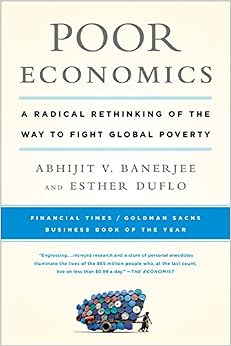
Poor Economics: A Radical Rethinking of the Way to Fight Global Poverty

Poor Economics: A Radical Rethinking of the Way to Fight Global Poverty


Poor Economics: A Radical Rethinking of the Way to Fight Global Poverty


Free PDF Poor Economics: A Radical Rethinking of the Way to Fight Global Poverty

Speaking about leisure activity, one of the pastimes that make somebody effective reads. Moreover, checking out a high qualified book. One that you can choose as the source is Poor Economics: A Radical Rethinking Of The Way To Fight Global Poverty This is not sort of typical book that has fantastic name. It is specific book that we truly advise you to review. By having hobby to review publications, you can constantly enhance your mind in all the time. And exactly what you could take currently to assist you discover the responsible reading product is this book.

The presence of this book is not only acknowledged by the individuals in the nation. Lots of cultures from outdoors nations will certainly also enjoy this book as the analysis source. The intriguing subject as well as classic topic turn into one of the all reasons to get by reading this publication. Poor Economics: A Radical Rethinking Of The Way To Fight Global Poverty additionally comes with the intriguing packaging beginning with the cover style and also its title, just how the writer brings the visitors to get into words, and also how the author tells the web content wonderfully.

Proper feels, proper truths, and also appropriate subjects could become the reasons of why you check out a publication. However, to earn you feel so pleased, you could take Poor Economics: A Radical Rethinking Of The Way To Fight Global Poverty as one of the sources. It is actually matched to be the reading book for someone like you, who actually need resources about the topic. The subject is really booming currently and also obtaining the most recent publication could help you discover the most up to date answer and realities.

read. Why? Once again, this is so suitable with the subject that you really need currently. It will certainly additionally make your choice of the day to fill the moment by reading this publication. Also it is a sort of soft data types, Poor Economics: A Radical Rethinking Of The Way To Fight Global Poverty web content will not be various with the print from the book.

Poor Economics: A Radical Rethinking of the Way to Fight Global Poverty

Review

“Their empirical approach differs from policy discussions that base support or criticism of aid programs on a broad overview; instead they illuminate many practicable and cost-effective ways to keep children and parents living healthier and more productive lives. An important perspective on fighting poverty.”The Guardian, June 6, 2011“Duflo and Banerjee tell these stories (of their randomised control trials) in a lovely new book called Poor Economics. As they admit, randomistas cannot answer some big questions – how to tackle food prices, for instance. But through lots of microstudies, they make a subtle case for one big argument: aid really can help poor people, provided the money follows the evidence.” Vancouver Sun, June 11, 2011“This new book by Abhijit Banerjee and Esther Duflo eschews the ideology of both the right and the left, and focuses on what measurable evidence has to say about the often-conflicting myths that dominate discussion of international development.  The book is unusual, perhaps unique, in that the authors took a lot of time to talk to poor people about what they think and what they want.” Seth Godin (blog),June 15, 2011“Fact-based, actionable and totally unforgettable insights on the fight to help the poor help themselves.” Business World (India) 7/30“Banerjee and Duflo assemble a fascinating assortment of interventions from across the globe in their book and they use the sharply differing perspectives of Sachs, who leads the “supply wallahs”  (this school believes in providing more schools, teachers, etc., to beat the education problem) and of Easterly who is a “demand wallah” (no point in providing education needlessly) as a backdrop to make their own points on how to avoid the poverty trap.  They offer five key lessons. First: the poor lack critical pieces of information and thus do not make right decisions; second:  the poor bear responsibility for too many aspects of their lives; third: markets are missing for the poor; four: governments start policies without understanding the reality within which these are supposed to succeed; and five: negative expectations of what people can do can be self-fulfilling prophecies. Modest suggestions? Yes, but this is part of the charm of the book. It is engaging and informative — which is more than can be said for many books of this genre.”Fast Company, June 15, 2011“Fascinating and captivating. Their work reads like a version of Freakonomics for the poor. There are insights into fighting global poverty from the remarkable and vital perspective of those whom we profess to serve…They remind us, I think, of our shared humanity and how at some fundamental levels we really do think alike.” IndianExpress.com, June 18, 2011“This is a welcome shift in methodology as it implicitly concedes the need to combine social science with hard economics.” Outlook India, June 25, 2011“It vividly, sensitively and rigorously brings alive the dilemmas of the poor as economic agents in a variety of contexts, whether as consumers or risk-takers. There are splendid chapters on a variety of topics that affect the poor: food, health, education, savings, micro-credit, insurance, risk and even some cursory observations on political behaviour.” Reilly Media,“Radar” blog, June 27, 2011 “This is possibly the best thing I will read all year, an insightful (and research-backed) book digging into the economics of poverty... Love that the website is so very complementary to the book, and 100% aligned with the ambition to convince and spread the word.”Publishers Weekly (online), May 2011Financial Express, July, 2011“[Banerjee and Duflo] draw upon the latest literature in the domain, write simply and succinctly on complex issues, display a level of honesty and humility rare among economists, and take the help of many highly illustrative examples to help us understand poverty from many different angles. The overall message is unambiguous. This is a complex problem, the causes and symptoms of which vary highly between individual cases. The solutions? Well, they are rightly silent on that — at best there is a murmur or two. Poverty is not a single problem so the solutions are too case-specific for a single solution… This should be standard reading and essential material in all aid organisations and more so in the National Advisory Council, Planning Commission, Prime Minister's Office, and the various ministries — all those who don't spend time understanding poverty in close vicinity.” Development Policy (blog)“The persuasiveness of 'Poor Economics' lies in its authors' intellectual approach…Moreover, it is well organised throughout and nicely written… ‘Poor Economics' is well worth reading in full.”Financial Times, April 30, 2011“The ingenuity of these experiments aside, it is the rich and humane portrayal of the lives of the very poor that most impresses. Both books show how those in poverty make sophisticated calculations in the grimmest of circumstances… Books such as these offer a better path forward. They are surely an experiment worth pursuing.” Cleveland Plain Dealer, May 2, 2011“Here's something Jesus might recommend: Reading the clear, calm and revelatory book "Poor Economics," from Abhijit Banerjee and Esther Duflo. It is gloriously instructive, and bracing testimony in itself to the gold standard of the Enlightenment: the scientific method. The authors, both economists at MIT, spent 15 years in the field, running randomized controlled trials to test various approaches to combating poverty. They bring both rigor and humility to a predicament typically riven by ideology and blowhards.”Financial World (UK),June 2011“A remarkable work: incisive, scientific, compelling and very accessible, a must-read for advocates and opponents of international aid alike, for interested laymen and dedicated academics… Amartya Sen, fellow Nobel Prize winner Robert Solow and superstar economics author Steven Levitt wholeheartedly endorse this book. I urge you to read it. It will help shape the debate in development economics.”Amartya Sen“A marvellously insightful book by two outstanding researchers on the real nature of poverty.”Steven D. Levitt“This book is a must-read for anyone who cares about world poverty.  It has been years since I read a book that taught me so much. ‘Poor Economics' represents the best that economics has to offer.” Robert Solow“Abhijit Banerjee and Esther Duflo are allergic to grand generalizations about the secret of economic development. Instead they appeal to many local observations and experiments to explore how poor people in poor countries actually cope with their poverty: what they know, what they seem (or don't seem) to want, what they expect of themselves and others, and how they make the choices that they can make. Apparently there are plenty of small but meaningful victories to be won, some through private and some through public action, that together could add up to a large gains for the world's poor, and might even start a ball rolling. I was fascinated and convinced.” The Economist's Free Exchange, April 21, 2011“To cut to the chase: this is the best book about the lives of the poor that I have read for a very, very long time. The research is wide-ranging. Much of it is new. Above all, Banerjee and Duflo take the poorest billion people as they find them. There is no wishful thinking. The attitude is straightforward and honest, occasionally painfully so. And some of the conclusions are surprising, even disconcerting.” The New York Times, May 19, 2011“Randomized trials are the hottest thing in the fight against poverty, and two excellent new books have just come out by leaders in the field. One is “Poor Economics,” by Abhijit Banerjee and Esther Duflo… These terrific books move the debate to the crucial question: What kind of aid works best?”Forbes.com, April 25, 2011“a compelling and important read… an honest and readable account about the poor that stands a chance of actually yielding results.” The Guardian, April 11, 2011“[Banerjee and Duflo] offer a refreshingly original take on development, and they are very aware of how they are bringing an entirely new perspective into a subject dominated by big polemics from the likes of Jeffrey Sachs and William Easterly… they are clearly very clever economists and are doing a grand job to enrich their discipline's grasp of complex issues of poverty – so often misunderstood by people who have never been poor.” The Economist, April 22, 2011“In an engrossing new book they draw on some intrepid research and a store of personal anecdotes to illuminate the lives of the 865m people who, at the last count, live on less than 0.99 a day.”The Economist's Free Exchange Blog, April 21, 2011“Let me recommend it… Poor Economics is more than just a compendium of the randomistas' greatest hits. For one thing, it contains some well-observed reporting.” Business Day (South Africa)“An inspiring book full of insights and empathy that should be mandatory reading for policy makers and aid workers alike. It strips away preconceptions and offers a wealth of new perspectives. With passion, enthusiasm and a true spirit of scholarship they have tried to pin down the often very simple ways in which the lives of the poor can be improved through, for example, better access to healthcare, education, food and finance — all vital to economic growth.”Book Dwarf, February 14, 2011“They have a compelling argument that antipoverty programs can be effective if properly designed, and illustrate ways to test them to make sure they actually work. The writing style is accessible and engaging, but it's not dumbed down or over-simplified. The complexity of the subject means that this book is taking me longer to read than other books, but I've found the effort genuinely rewarding.”Kirkus Review, April 15, 2011Matthew Yglesias, May 7, 2011“Esther Duflo won the John Bates Clark medal last year for her work on development economics, so I was excited to read her new book with Abhijit Banerjee Poor Economics: A Radical Rethinking of the Way to Fight Global Poverty. It's a good book. It doesn't really contain a radical rethinking of the way to fight global poverty, but it does try to cut past lame debates over whether or not foreign aid “works” to instead attempt to find ways to actually assess which programs are working, which aren't, and how to improve those that don't.” The Wall Street Journal, April 30, 2011“Marvelous, rewarding…'More Than Good Intentions' and ‘Poor Economics' are marked by their deep appreciation of the precariousness that colors the lives of poor people as they tiptoe along the margin of survival. But I would give an edge to Mr. Banerjee and Ms. Duflo in this area—the sheer detail and warm sympathy on display reflects a true appreciation of the challenges their subjects face… They have fought to establish a beachhead of honesty and rigor about evidence, evaluation and complexity in an aid world that would prefer to stick to glossy brochures and celebrity photo-ops. For this they deserve to be congratulated—and to be read.”

Read more

About the Author

Abhijit Vinayak Banerjee is the Ford Foundation International Professor of Economics at MIT. He is the recipient of many honors and awards, including most recently the inaugural Infosys Prize in 2009, and has been an honorary advisor to many organizations including the World Bank and the Government of India. Esther Duflo is the Abdul Latif Jameel Professor of Poverty Alleviation and Development Economics at MIT. She is a recipient of the MacArthur “genius” award (2009) and the John Bates Clark medal awarded annually to the best American economist under forty (2012). In 2003, Banerjee and Duflo cofounded the Abdul Latif Jameel Poverty Action Lab (J-PAL), which they continue to direct.

Read more

Product details

Paperback: 320 pages

Publisher: PublicAffairs; Reprint edition (March 27, 2012)

Language: English

ISBN-10: 9781610390934

ISBN-13: 978-1610390934

ASIN: 1610390938

Product Dimensions:

5.5 x 1 x 8.2 inches

Shipping Weight: 9.6 ounces (View shipping rates and policies)

Average Customer Review:

4.4 out of 5 stars

225 customer reviews

Amazon Best Sellers Rank:

#29,403 in Books (See Top 100 in Books)

This book is a treasure trove of information about global poverty. I came into the book with a host of naïve assumptions about why poverty exists and what can be done to stop it, but the authors referenced a plethora of research studies that obliterated my ill-conceived notions about poverty and provided me with a solid foundation of knowledge upon which I can build.Prior to this book, I held a number of beliefs that I simply assumed were common sense. For example, I had assumed that if you offered free food to someone who is consuming barely enough calories to survive that the overall amount of calories they consume would increase. Apparently this is not the case-- if you give them free rice, they will take the money they used to spend on rice and instead spend it on more expensive, unhealthier food (or worse yet, something like tobacco). Thus, even if everyone in developed countries purchased food and gave it to the people in poorer nations this would not solve world hunger.In chapter after chapter the authors bring up an issue faced by the world's poor, offer up the existing theories about the problem, point to research that sheds light on why the theories or current efforts fail to address the problem, and suggest solutions that we have reason to believe would work based on the findings of various research studies. The issues faced by the poor are wide-ranging and the authors do an excellent job trying to cover them all. Here are the main issues covered (a full chapter is devoted to each one):1. Hunger (why poor people are not getting enough calories)2. Health (why poor people don't try harder to get their kids de-wormed, vaccinated, etc.)3. Family size (why poor people choose to have large families even though it is difficult to support more children)4. Education (why poor people don't invest in all of their kids' education)5. Risk/insurance (why poor people incur so much risk yet aren't insuring themselves against it)6. Borrowing/microfinance (why microfinance isn't going to solve poverty and why borrowing is still an issue for some)7. Saving (why poor people aren't saving)8. Entrepreneurship (why poor people aren't all the great "entrepreneurs" that microfinance makes them out to be)9. Politics/institutions/corruption (why poor people can see improvements in their lives even with corrupt institutions)Each chapter begins with a difficult question which might seem to have an intuitive answer but does not; then the authors point to the results of research studies that shed light on the answer proceed to explain why the problem has not been solved if we know why it is occurring. For example, the chapter on saving begins with the following question: can poor people actually save money? Many people would immediately answer "of course not" simply based on the fact that the people we're talking about are poor. However, the authors provide convincing evidence that shows poor people are in fact capable of saving. This begs the question, if they can save, and it would be in their interest to do so (to provide a safety net for the enormous risk they face in their lives-- e.g., a family members becomes sick and can't work), then why don't they save? Are they simply lazy, short-sighted, and incompetent as we are told in the press? As you might imagine, the answer is not so simple (or condescending). Poor people don't save for a variety of reasons. First off, many of the world's poor don't have easy access to savings accounts. Banks are highly regulated and thus there is a significant cost involved in serving a client-- so why would a bank make an effort to cater to poor communities where they'll receive very little income from their customers to compensate for the costs they're incurring in offering banking services? Furthermore, it is easier for middle-class or wealthy people to save, not simply because they have more income but because the system makes it incredibly simple: for example, many people work for an employer that sets up a 401k plan for them and offers to match funds and deduct funds from your paycheck without you having to do anything. Most of the world's poor do not have such a simple option for saving-- they must exercise willpower week after week to overcome the temptation to spend (which we all have, poor or not), whereas the rest of us can just tell an employer once that we want to contribute to our 401k plan and that's the end of it. The authors even told stories of women who were taking out a loan at 24% interest and then saving the money in an account that only paid 4% interest. This seems incredibly foolish, so the authors inquired as to the women's motivations. It turns out they were doing this because this would force them to save-- having to repay the repay the loan would act as a disciplining mechanism. Essentially they were trying to force themselves to save because they didn't have a 401k account that would just automatically withdraw the money. They face the same temptations that we all do, they just don't have an easy means of overcoming them.But the authors don't simply point out problems and throw up their hands in desperation-- they offer concrete solutions to each problem. Not all the solutions are equally convincing and the authors are the first to admit there is no "magic bullet" but they go a long way toward providing a framework for how we might think about solving global poverty in the next one hundred years. For example, in the chapter that deals with the enormous amount of risk the poor face (due to crop failures, health problems, etc.) they ask why the poor don't simply obtain insurance. The answer is complicated and has to do with moral hazard, adverse selection, and fraud, the combination of which has made it difficult for a "market" in microinsurance to develop in the same way we've had an innovation in microfinance. Thus, the authors suggest that governments step in and help create such a market by providing subsidies for insurance premiums. Before you throw up your hands and yell "that's socialism!" bear in mind that they cite previous instances of such subsidies and how they led to dramatic increases in the number of poor people who were insured.There is no easy way to solve global poverty, as the world's poor face a number of problems that seem intractable. Yet when we examine each of these problems by looking at how the poor actually behave and how they respond to incentives, we can begin to develop a framework for how we might solve each of these problems and reach a point where poverty is a thing of the past. But before we can do anything to eradicate poverty, we need to understand why it exists, why it is self-perpetuating, and what can be done to stop it. This is the function of this book, and it excels on all fronts.

The authors identify three major approaches to dealing with world poverty, suggest that whatever their virtues and faults, there is a very piecemeal and pragmatic approach through which significant gains can be made without addressing the systemic obstacles identified by the three approaches. Their analysis is brilliant, focused, rooted in first-rate data sets, yet rich in social detail and anecdotal vignettes. I believe there are probably right, and their approach deserves to be widely studied an evaluated by policy makers in the advanced and developing countries.The dominant school of thought is probably the supply-side theory, most visibly represented by Jeffrey Sachs (the authors call him a "supply wallah"). According to this theory, the poor are poor because they lack money and resources, and there is a "poverty trap" such that investment in productive technologies must be very large in order to have a positive and sustainable effect. Because poor individuals, and even poor countries, lack the capacity to finance such investments, they are trapped in a low-level economic equilibrium. For this reason, Sachs and the supply theorists advise that the rich countries transfer a large lump-sum amount of money to a poor country, so it can get over the poverty-trap hump.A second salient school of thought is the demand-side theory, represented by William Easterly and many others. Demand-siders (the authors call them "demand wallahs") believes that the poor are poor because they do not want to undertake what would be necessary to move out of poverty and there is no poverty trap. Thus, if you throw money and resources to the poor, they consume it immediately rather than using it for long-term betterment.The third school of thought is the corruption school, represented by Acemoglu and Robinson, as expounded in the book Why Nations Fail. According to this theory, countries remain poor because their governments are predatory, exploiting the citizenry by refusing to make investments in productive infrastructure, by direction all profits to cronies, and by permitting rampant corruption that renders creative entrepreneurship unprofitable. According to this school, to which I admit to being very favorable, the supply wallahs are wrong because the resources throw into the system will be appropriate by the rich and powerful, and the demand wallahs are wrong because the poor are actively maintained by the oligarchy in their position of servitude.The authors are very insightful and balanced in presenting the views of these three schools and the evidence that supports these various positions. They also clearly explain their mutual critiques. For instance, the supply wallahs claim that states are predatory and corruption is rampant only because the country is so poor, and the demand wallahs claim that when the people want to move out of poverty, they will reform their governments. I find these defenses of supply and demand wallahs rather tendentious, leaving the corruptions school as the overall most plausible school.I think it is fair to say that Banerjee and Duflo have little sympathy for demand and supply wallahs, but considerable respect for the corruption theory. Their own position is that there are virtually always ways to productively intervene to pull a significant fraction of people out of poverty. The authors, who have collected huge amounts of data and interviewed many poor people from around the world, make the following argument.Most important, the poor in a poor country have about the same array of preferences and capacities as that of the human population as a whole, and humans are substantively rational in making decisions that affect their lives. However, the poor have a lot fewer resources than the well-off, they lack information and skills provided to the well-off, and lack access to such public goods as clean water and consumables subject to food and drug regulations.The poor are therefore extremely heterogeneous. Microfinance organizations like the Grameen Bank therefore provide a general path to affluences, simply because only a fraction of the population has the will and ability to be successful entrepreneurs. On the other hand, entrepreneurs often fail several times before finally becoming successful, so the authors advise an expanded microfinance industry that is more tolerant of the sorts of behaviors that may involve short-term losses, but lead to long-run successes. The authors conclude that we must consider microfinance policies as extremely successful and worthy of following, even though it is not panacea for the abolition of poverty.Because the poor lack access to social services freely available to the non-poor, the authors advocate such measures as providing clean water to poor villages and adding nutrients, such as iron, to staple foods. This, they argue, is not charity but simply the extension to poor of services already supplied to the rest of society.Concerning education, the authors believe that poor parents are usually very eager to have their children educated, although they may lack the means of enrolling their children in schools or providing for their transportation to and from school. However, too often the content of schooling is determined by what is good for the more affluent classes, so poor children are led voluntarily to quit school. The authors advise that the content of education take into account the preferences and culture of the target population.I cannot do justice to the beauty and intricacy of the argument developed in this book. The authors' main point is that we must look closely at the details of the lives of the poor in order to develop policies to help people to pull themselves out of poverty. This is neither demand or supply wallah-ism, and as they repeatedly stress, real progress can be made even in a society whose government provides a poor environment for economic development.

Poor Economics: A Radical Rethinking of the Way to Fight Global Poverty PDF
Poor Economics: A Radical Rethinking of the Way to Fight Global Poverty EPub
Poor Economics: A Radical Rethinking of the Way to Fight Global Poverty Doc
Poor Economics: A Radical Rethinking of the Way to Fight Global Poverty iBooks
Poor Economics: A Radical Rethinking of the Way to Fight Global Poverty rtf
Poor Economics: A Radical Rethinking of the Way to Fight Global Poverty Mobipocket
Poor Economics: A Radical Rethinking of the Way to Fight Global Poverty Kindle

Poor Economics: A Radical Rethinking of the Way to Fight Global Poverty PDF

Poor Economics: A Radical Rethinking of the Way to Fight Global Poverty PDF

Poor Economics: A Radical Rethinking of the Way to Fight Global Poverty PDF

Rabu, 16 Mei 2012

Download PDF The Movie~ The Legend of 1900~ For Piano Solo Sheet Music BookBy Dremi Music Publishing

Download PDF The Movie~ The Legend of 1900~ For Piano Solo Sheet Music BookBy Dremi Music Publishing

The very first factor of why selecting this book is since it's offered in soft file. It implies that you could wait not only in one device yet also bring it almost everywhere. The Movie~ The Legend Of 1900~ For Piano Solo Sheet Music BookBy Dremi Music Publishing will feature how deep guide will certainly offer for you. It will give you something new. Also this is only a book; the visibility will truly demonstrate how you take the inspirations. And currently, when you really should make handle this publication, you could start to get it.

The Movie~ The Legend of 1900~ For Piano Solo Sheet Music BookBy Dremi Music Publishing

The Movie~ The Legend of 1900~ For Piano Solo Sheet Music BookBy Dremi Music Publishing


The Movie~ The Legend of 1900~ For Piano Solo Sheet Music BookBy Dremi Music Publishing


Download PDF The Movie~ The Legend of 1900~ For Piano Solo Sheet Music BookBy Dremi Music Publishing

When a brand-new decision comes to be a brand-new maker of much better living, why should regret of it? Something old needs to be changed as well as restored with something brand-new, if the new point is better. As the added task that we will recommend, if you have no concept to appreciate your downtime, reading could assist you to waste time wisely. Yeah, wasting time totally can be done by everyone. However, be wisely in investing the time is extremely rare. So, do you intend to be among the smart people?

Awaiting releasing this book is despite. It will not make you feel burnt out as what you will certainly feel when awaiting someone. It will certainly contain inquisitiveness of exactly how this book is expected to be. When waiting a favourite publication to review, one sensation that commonly will occur wonders. So, what make you really feel so curious in this The Movie~ The Legend Of 1900~ For Piano Solo Sheet Music BookBy Dremi Music Publishing

One to be reason of why you have to pick this book can be obtained when you're beginning. In addition, when finishing this book, you can really feel various life. What type of distinction? It will certainly additionally depend on your selection to transform your life. However, actually this The Movie~ The Legend Of 1900~ For Piano Solo Sheet Music BookBy Dremi Music Publishing end up being some of the most desired publication in the world. It provides you not only experience but additionally the new understanding.

Other reasons are that this publication is created by an inspiring writer that has professionalism to write and also make a publication. Nonetheless, the item is easy yet meaningful. It does not use the challenging as well as complicated words to recognize. The content that is used is truly significant. You can take some remarkable reasons of reviewing The Movie~ The Legend Of 1900~ For Piano Solo Sheet Music BookBy Dremi Music Publishing when you have actually started reviewing his book intelligently.

The Movie~ The Legend of 1900~ For Piano Solo Sheet Music BookBy Dremi Music Publishing

The Movie~ The Legend of 1900~ For Piano Solo Sheet Music Book

  • Sales Rank: #373591 in Books
  • Published on: 2000
  • Binding: Sheet music
  • 63 pages

The Movie~ The Legend of 1900~ For Piano Solo Sheet Music BookBy Dremi Music Publishing PDF
The Movie~ The Legend of 1900~ For Piano Solo Sheet Music BookBy Dremi Music Publishing EPub
The Movie~ The Legend of 1900~ For Piano Solo Sheet Music BookBy Dremi Music Publishing Doc
The Movie~ The Legend of 1900~ For Piano Solo Sheet Music BookBy Dremi Music Publishing iBooks
The Movie~ The Legend of 1900~ For Piano Solo Sheet Music BookBy Dremi Music Publishing rtf
The Movie~ The Legend of 1900~ For Piano Solo Sheet Music BookBy Dremi Music Publishing Mobipocket
The Movie~ The Legend of 1900~ For Piano Solo Sheet Music BookBy Dremi Music Publishing Kindle

The Movie~ The Legend of 1900~ For Piano Solo Sheet Music BookBy Dremi Music Publishing PDF

The Movie~ The Legend of 1900~ For Piano Solo Sheet Music BookBy Dremi Music Publishing PDF

The Movie~ The Legend of 1900~ For Piano Solo Sheet Music BookBy Dremi Music Publishing PDF

Kamis, 26 April 2012

Ebook Free Electromagnetic Waveguides and Transmission Lines (Oxford Engineering Science Series)By Frank Olyslager

Ebook Free Electromagnetic Waveguides and Transmission Lines (Oxford Engineering Science Series)By Frank Olyslager

Need an assistance to find the new launched book? Never mind! Don't think so hard because we are constantly in to aid you. Whoever you are, to discover the book, from lots of nations, is now simple. Here, we have the great deals collections of various kinds as well as genres of guides. The books are provided in soft data systems as well as you could find the link for each and every publication to download and install.

Electromagnetic Waveguides and Transmission Lines (Oxford Engineering Science Series)By Frank Olyslager

Electromagnetic Waveguides and Transmission Lines (Oxford Engineering Science Series)By Frank Olyslager


Electromagnetic Waveguides and Transmission Lines (Oxford Engineering Science Series)By Frank Olyslager


Ebook Free Electromagnetic Waveguides and Transmission Lines (Oxford Engineering Science Series)By Frank Olyslager

After for some times, publications constantly turn into one selection to get the resource, the trustworthy and valid sources. The topics about service, monitoring, national politics, law, as well as several various other subjects are readily available. Many authors from all over the world constantly make guide to be updated. The research, experience, understanding, and also motivations always come once to others. It will certainly prove that book is timeless and flawless.

Knowing several publications might not verify you to be a much better individual. However recognizing and also reviewing books will certainly make you feel much better. Book at the device to reach effective is smart words that are uttered by some individuals. Do you think it? Maybe, only couple of people that such as the words as well as believe in those words. Nevertheless, you should think it due to the fact that publication can bring you better thing as expected as the objectives of reading and publications. As the Electromagnetic Waveguides And Transmission Lines (Oxford Engineering Science Series)By Frank Olyslager that we serve, this is not type of nonsense publication that will certainly influence nothing.

By going to the web link, you could make the take care of the site to get the soft file. Ever mind, there is no difference between this type of soft data book and the published book. It will certainly set apart only in the forms. And just what you will also acquire from Electromagnetic Waveguides And Transmission Lines (Oxford Engineering Science Series)By Frank Olyslager soft file is that it will certainly instruct you the best ways to live your life, the best ways to improve your life, and also the best ways to guide to be better.

So, merely be here, locate guide Electromagnetic Waveguides And Transmission Lines (Oxford Engineering Science Series)By Frank Olyslager now as well as read that promptly. Be the initial to read this publication Electromagnetic Waveguides And Transmission Lines (Oxford Engineering Science Series)By Frank Olyslager by downloading in the web link. We have some various other books to check out in this internet site. So, you can locate them additionally quickly. Well, now we have actually done to provide you the most effective e-book to read today, this Electromagnetic Waveguides And Transmission Lines (Oxford Engineering Science Series)By Frank Olyslager is actually ideal for you. Never ever dismiss that you need this e-book Electromagnetic Waveguides And Transmission Lines (Oxford Engineering Science Series)By Frank Olyslager to make far better life. On the internet e-book Electromagnetic Waveguides And Transmission Lines (Oxford Engineering Science Series)By Frank Olyslager will really offer very easy of everything to read and also take the benefits.

Electromagnetic Waveguides and Transmission Lines (Oxford Engineering Science Series)By Frank Olyslager

Based on work for which the author won the IEEE Microwave Prize, this monograph examines theoretical aspects of circuit modelling of high-frequency electromagnetic structures using the Lorentz reciprocity theorem. It provides a novel approach to this important area and includes numerous numerical examples. For both TEM and Quasi-TEM fields, it covers in detail transmission, bitransmission, and incident fields.

  • Sales Rank: #3144535 in Books
  • Published on: 1999-07-29
  • Original language: English
  • Number of items: 1
  • Dimensions: 9.30" h x .70" w x 6.30" l, 1.22 pounds
  • Binding: Hardcover
  • 240 pages

Electromagnetic Waveguides and Transmission Lines (Oxford Engineering Science Series)By Frank Olyslager PDF
Electromagnetic Waveguides and Transmission Lines (Oxford Engineering Science Series)By Frank Olyslager EPub
Electromagnetic Waveguides and Transmission Lines (Oxford Engineering Science Series)By Frank Olyslager Doc
Electromagnetic Waveguides and Transmission Lines (Oxford Engineering Science Series)By Frank Olyslager iBooks
Electromagnetic Waveguides and Transmission Lines (Oxford Engineering Science Series)By Frank Olyslager rtf
Electromagnetic Waveguides and Transmission Lines (Oxford Engineering Science Series)By Frank Olyslager Mobipocket
Electromagnetic Waveguides and Transmission Lines (Oxford Engineering Science Series)By Frank Olyslager Kindle

Electromagnetic Waveguides and Transmission Lines (Oxford Engineering Science Series)By Frank Olyslager PDF

Electromagnetic Waveguides and Transmission Lines (Oxford Engineering Science Series)By Frank Olyslager PDF

Electromagnetic Waveguides and Transmission Lines (Oxford Engineering Science Series)By Frank Olyslager PDF

Senin, 09 April 2012

PDF Ebook Hedge Fund Modelling and Analysis: An Object Oriented Approach Using C++ (The Wiley Finance Series)By Paul Darbyshire

PDF Ebook Hedge Fund Modelling and Analysis: An Object Oriented Approach Using C++ (The Wiley Finance Series)By Paul Darbyshire

Checking out guide alike is a way that will certainly assist you to life much better and also open up the new window on the globe. This smart word holds true. When you open your mind as well as try to like analysis, even more knowledge, lessons, as well as experiences are obtained. So, you can improve your life system and also tasks consisted of the mind and thoughts. And also this Hedge Fund Modelling And Analysis: An Object Oriented Approach Using C++ (The Wiley Finance Series)By Paul Darbyshire is just one of the books that will certainly understand to use it.

Hedge Fund Modelling and Analysis: An Object Oriented Approach Using C++ (The Wiley Finance Series)By Paul Darbyshire

Hedge Fund Modelling and Analysis: An Object Oriented Approach Using C++ (The Wiley Finance Series)By Paul Darbyshire


Hedge Fund Modelling and Analysis: An Object Oriented Approach Using C++ (The Wiley Finance Series)By Paul Darbyshire


PDF Ebook Hedge Fund Modelling and Analysis: An Object Oriented Approach Using C++ (The Wiley Finance Series)By Paul Darbyshire

Dear viewers, when you are searching the brand-new book collection to read this day, Hedge Fund Modelling And Analysis: An Object Oriented Approach Using C++ (The Wiley Finance Series)By Paul Darbyshire can be your referred publication. Yeah, even many publications are provided, this book can swipe the viewers heart so much. The material and theme of this book truly will touch your heart. You could locate more and more experience and also knowledge how the life is undertaken.

This is an extremely reasonable publication that needs to read. The adhering to might offer you the way to get this publication. It is in fact alleviate. When the other individuals have to walk around and also go outdoors to get the book in the book shop, you can just be by visiting this site. There is supplied web link that you could discover. It will certainly lead you to go to guide page as well as obtain the Hedge Fund Modelling And Analysis: An Object Oriented Approach Using C++ (The Wiley Finance Series)By Paul Darbyshire Done with the download as well as get this book, begin to review.

To get this book Hedge Fund Modelling And Analysis: An Object Oriented Approach Using C++ (The Wiley Finance Series)By Paul Darbyshire, you may not be so baffled. This is online book Hedge Fund Modelling And Analysis: An Object Oriented Approach Using C++ (The Wiley Finance Series)By Paul Darbyshire that can be taken its soft file. It is various with the online book Hedge Fund Modelling And Analysis: An Object Oriented Approach Using C++ (The Wiley Finance Series)By Paul Darbyshire where you can buy a book and then the vendor will certainly send out the printed book for you. This is the place where you could get this Hedge Fund Modelling And Analysis: An Object Oriented Approach Using C++ (The Wiley Finance Series)By Paul Darbyshire by online as well as after having manage buying, you could download and install Hedge Fund Modelling And Analysis: An Object Oriented Approach Using C++ (The Wiley Finance Series)By Paul Darbyshire on your own.

What sort of book Hedge Fund Modelling And Analysis: An Object Oriented Approach Using C++ (The Wiley Finance Series)By Paul Darbyshire you will choose to? Now, you will not take the published book. It is your time to get soft file book Hedge Fund Modelling And Analysis: An Object Oriented Approach Using C++ (The Wiley Finance Series)By Paul Darbyshire instead the published papers. You could appreciate this soft data Hedge Fund Modelling And Analysis: An Object Oriented Approach Using C++ (The Wiley Finance Series)By Paul Darbyshire in whenever you expect. Also it remains in expected location as the various other do, you could read guide Hedge Fund Modelling And Analysis: An Object Oriented Approach Using C++ (The Wiley Finance Series)By Paul Darbyshire in your device. Or if you want more, you could read on your computer system or laptop to obtain full screen leading. Juts discover it right here by downloading and install the soft file Hedge Fund Modelling And Analysis: An Object Oriented Approach Using C++ (The Wiley Finance Series)By Paul Darbyshire in web link page.

Hedge Fund Modelling and Analysis: An Object Oriented Approach Using C++ (The Wiley Finance Series)By Paul Darbyshire

Use powerful C# algorithms and Object Oriented Programming (OOP) to aid in hedge fund decision making

Hedge fund managers cannot afford to ignore their risk/return profiles, and taking advantage of new technologies is an excellent way to minimize risk and capitalize on various investment styles. As Hedge Fund Analysis and Modeling Using C# demonstrates, the C# programming language is perfectly suited to hedge fund analysis. This book serves as a complete course in hedge fund modeling and provides a primer on C# and Object Oritented Programming (OOP) that will allow you to manage risk easily and make the most of key statistics.

Covering both basic and risk-adjusted performance measures, Hedge Fund Analysis and Modeling Using C# moves from simple to sophisticated analysis techniques, using worked examples to show you exactly how to manage return in an era of volatility and financial risk. You'll have access to:

  • Complete guidance on using C# and Objected Oriented Programming (OOP) for analysis using non-normal returns data and other key statistics
  • Bonus content on a companion website containing C# programs, algorithms, and data available for download
  • Real world modeling exercises that demonstrate the identification of risk and return factors
  • Complete guidance for optimizing hedge fund decisions using quantitative strategies

This is the only book on the market that guides you through using C# to model hedge fund risks and returns. Along with its companion titles on Excel/VBA analysis and MATLAB analysis, Hedge Fund Analysis and Modeling Using C# contributes important guidance for hedge fund managers who want to take advantage of technological platforms for optimal fund performance.

  • Sales Rank: #2929791 in Books
  • Published on: 2016-12-19
  • Original language: English
  • Number of items: 1
  • Dimensions: 9.60" h x .0" w x 6.70" l, .0 pounds
  • Binding: Hardcover
  • 280 pages

Hedge Fund Modelling and Analysis: An Object Oriented Approach Using C++ (The Wiley Finance Series)By Paul Darbyshire PDF
Hedge Fund Modelling and Analysis: An Object Oriented Approach Using C++ (The Wiley Finance Series)By Paul Darbyshire EPub
Hedge Fund Modelling and Analysis: An Object Oriented Approach Using C++ (The Wiley Finance Series)By Paul Darbyshire Doc
Hedge Fund Modelling and Analysis: An Object Oriented Approach Using C++ (The Wiley Finance Series)By Paul Darbyshire iBooks
Hedge Fund Modelling and Analysis: An Object Oriented Approach Using C++ (The Wiley Finance Series)By Paul Darbyshire rtf
Hedge Fund Modelling and Analysis: An Object Oriented Approach Using C++ (The Wiley Finance Series)By Paul Darbyshire Mobipocket
Hedge Fund Modelling and Analysis: An Object Oriented Approach Using C++ (The Wiley Finance Series)By Paul Darbyshire Kindle

Hedge Fund Modelling and Analysis: An Object Oriented Approach Using C++ (The Wiley Finance Series)By Paul Darbyshire PDF

Hedge Fund Modelling and Analysis: An Object Oriented Approach Using C++ (The Wiley Finance Series)By Paul Darbyshire PDF

Hedge Fund Modelling and Analysis: An Object Oriented Approach Using C++ (The Wiley Finance Series)By Paul Darbyshire PDF

Sabtu, 07 April 2012

Ebook , by Jefferson Hawkins

Ebook , by Jefferson Hawkins

We provide guide is based on the reasons that will affect you to live far better. Also you have already the reading publication; you can additionally enhance the knowledge by obtaining them develop , By Jefferson Hawkins This is actually a kind of publication that not just supplies the motivations. The incredible lessons, Experiences, and also understanding can be acquired. It is why you should read this book, even page by web page to the surface.

, by Jefferson Hawkins

, by Jefferson Hawkins


, by Jefferson Hawkins


Ebook , by Jefferson Hawkins

In fitting the new updated publication released, we involve you. We are the internet internet site that always offers a very great method, fantastic term, as well as great checklists of the collections books from several countries. Reserve as a manner to spread out the news as well as information regarding the life, social, sciences, religions, numerous others holds a crucial guideline. Publication might not as the style when they run out day, they will work as absolutely nothing.

Well, among the initiatives to enhance the experience and expertise is by reading. You recognize, reading publication, specifically, will overview of understand new point. When you aren't sure concerning what you wish to perform in your task, you could start by checking out the book. When you are ashamed to ask for someone, you can have guide to check out. Whatever guide is, it will certainly constantly offer the kindness. In order to help you locate your brand-new effort, this , By Jefferson Hawkins might excel.

While the other individuals in the shop, they are unsure to find this , By Jefferson Hawkins straight. It might require more times to go shop by store. This is why we intend you this site. We will provide the best way as well as referral to obtain guide , By Jefferson Hawkins Even this is soft documents book, it will certainly be simplicity to lug , By Jefferson Hawkins anywhere or save at home. The distinction is that you may not need move the book , By Jefferson Hawkins place to place. You could need only copy to the various other gadgets.

Yeah, reading a publication , By Jefferson Hawkins can add your close friends lists. This is one of the formulas for you to be effective. As recognized, success does not imply that you have great things. Recognizing and also recognizing greater than various other will offer each success. Close to, the notification as well as perception of this , By Jefferson Hawkins could be taken and also chosen to act.

, by Jefferson Hawkins

Product details

File Size: 5983 KB

Print Length: 270 pages

Publisher: Hawkeye Publishing Co.; 1 edition (May 9, 2012)

Publication Date: May 9, 2012

Sold by: Amazon Digital Services LLC

Language: English

ASIN: B008228CX0

Text-to-Speech:

Enabled

P.when("jQuery", "a-popover", "ready").execute(function ($, popover) {

var $ttsPopover = $('#ttsPop');

popover.create($ttsPopover, {

"closeButton": "false",

"position": "triggerBottom",

"width": "256",

"popoverLabel": "Text-to-Speech Popover",

"closeButtonLabel": "Text-to-Speech Close Popover",

"content": '

' + "Text-to-Speech is available for the Kindle Fire HDX, Kindle Fire HD, Kindle Fire, Kindle Touch, Kindle Keyboard, Kindle (2nd generation), Kindle DX, Amazon Echo, Amazon Tap, and Echo Dot." + '
'

});

});

X-Ray:

Not Enabled

P.when("jQuery", "a-popover", "ready").execute(function ($, popover) {

var $xrayPopover = $('#xrayPop_B7058D6E538611E99538CA12759EDA85');

popover.create($xrayPopover, {

"closeButton": "false",

"position": "triggerBottom",

"width": "256",

"popoverLabel": "X-Ray Popover ",

"closeButtonLabel": "X-Ray Close Popover",

"content": '

' + "X-Ray is not available for this item" + '
',

});

});

Word Wise: Enabled

Lending: Not Enabled

Screen Reader:

Supported

P.when("jQuery", "a-popover", "ready").execute(function ($, popover) {

var $screenReaderPopover = $('#screenReaderPopover');

popover.create($screenReaderPopover, {

"position": "triggerBottom",

"width": "500",

"content": '

' + "The text of this e-book can be read by popular screen readers. Descriptive text for images (known as “ALT text”) can be read using the Kindle for PC app and on Fire OS devices if the publisher has included it. If this e-book contains other types of non-text content (for example, some charts and math equations), that content will not currently be read by screen readers. Learn more" + '
',

"popoverLabel": "The text of this e-book can be read by popular screen readers. Descriptive text for images (known as “ALT text”) can be read using the Kindle for PC app if the publisher has included it. If this e-book contains other types of non-text content (for example, some charts and math equations), that content will not currently be read by screen readers.",

"closeButtonLabel": "Screen Reader Close Popover"

});

});

Enhanced Typesetting:

Enabled

P.when("jQuery", "a-popover", "ready").execute(function ($, popover) {

var $typesettingPopover = $('#typesettingPopover');

popover.create($typesettingPopover, {

"position": "triggerBottom",

"width": "256",

"content": '

' + "Enhanced typesetting improvements offer faster reading with less eye strain and beautiful page layouts, even at larger font sizes. Learn More" + '
',

"popoverLabel": "Enhanced Typesetting Popover",

"closeButtonLabel": "Enhanced Typesetting Close Popover"

});

});

Amazon Best Sellers Rank:

#295,630 Paid in Kindle Store (See Top 100 Paid in Kindle Store)

So with everything that has been in the news lately regarding the Church of Scientology I felt this older book was a must read. I have read Leah Remini's tell all about the Church and it was great. But more in keeping with a Hollywood tell all with a Scientology bent. This book offered an even closer look at the inner workings of the upper echelons of Scientology. It was very detailed and well written and followed the author's journey through his personal and professional life with the Church. In addition to his eventual escape and refusal to return.

Mr. Hawkins joined Scientology, as most do, looking for higher purpose. He thought he found a way to better himself and the world. He stuck to it despite hardships, even mental and physical abuse. After taking it all, they made him leave after 30+ years of working with almost no pay, with no money, a huge bill, and the hope he would try and grovel his way back into their good graces. Mr. Hawkins tells his story honestly and openly. He believed and he wanted to be a Scientologist, but eventually his eyes opened and the truth came through. A book well worth the read. Religions do not act the way Scientology does.

I've read multiple books on Scientology, everything from Dianetics by the old man himself to all of the suggested reading referenced at the end of this one. I really liked this book. I find it so incredibly interesting that while Mr. Hawkins was going to car races, meetings in New York, getting bonuses and a Saturday off here and there, Jenna Hill or Marc Headley was potentially out there somewhere cleaning something with a toothbrush. Then all of a sudden, seemingly out of nowhere, poof, Mr. Hawkins is in the same boat as everyone else. My opinion is that writing this book must have dredged up a lot of emotions. I could still sense the undertones of codependency by the way that he was describing the passion and excitement of some of his many successes because of the benefits they brought to the church. My sense was that this wasn't entirely in the past tense and weren't just being presented to demonstrate the success but because it was still, somehow, a connection. Again, just one girl's, armchair psychological opinion. It took me a little while to get through the European tour, it moved a little slow, but after that it sailed along. (See what I did there?) That said; I adore this man. He's a good guy. He's a smart guy. He got sucked in anyway. And he gets that. He gets "it." I shed some tears, some happy some sad. But mostly happy. I'm proud of you Mr. Hawkins. I hope you're proud of you, too.

Great insight into a horrible, abusive cult. It's scary what they get away with. Whether they are legally considered a "religion" or not, I don't understand how they are not held accountable for the many crimes that are committed by this organization on a regular basis. Child abuse, fraud, human trafficking, kidnapping, the list goes on and on. They ruin so many lives and make millions (that they don't have to pay taxes on) while they're doing it! I've read a number of books on what really goes on in Scientology and the thought that constantly comes to mind is "How dare they"! So many horrors, one of the worst being their "disconnection" policy that separates mothers from children, husbands from wives, etc. At the very least the U.S. Government has to take away their tax exempt status since Scientology is all about money. I'm always happy to read about someone who got out of this cult and I admire Mr. Hawkins for writing his story and trying to help current Scientologists leave the organization.

I have read several Scientology revelations, all are 5 star to me!! I am amazed at how much abuse that is tolerated!! all for the sake of Religion?? Originatedby a science fiction writer??? what a joke!!! It reminds me of the old movie "Invasion of the body snatches" I am sure that Hubbard had that in mind when he created his " Creation" What a clever Monster!!

This review is from: Counterfeit Dreams (Kindle Edition)I was thinking of getting involved in Scientology and decided to read a few books about it first.This book is an eye opener into Scientology and how it works behind the scenes. After spending 30 odd years in Scientology the author just walked away with basically nothing at 58 years old.It has inspired me to live each day fully and completely.The end of the book had me in tears and because of this I now know that Scientology isn't for me.It's a shame that the author had to go though such a rough time so we could all learn from his mistake so I'd like to thank the author for saving years off my life and keep my money in my pocket.

I have read several accounts of harowing escapes from Scientology. Marc Headley, Mike Rinder, Nancy Many, and many others. Jeff Hawkins' book is less of an eposé of the cult's abuses, and more of a look into his own very intelligent mind that sheds light on why he travelled that bridge to hell and how he returned to himself and his truth. Very well written.

This book is so very well written. Jefferson Hawkins has by no means been a sideline spectator, or researching 3rd party... he has lived and breathed the deadly fumes of the Church of Scientology. Looking at the life he led from his perspective, the reader is immersed in the very depths of a world we would be ashamed we allow to exist. The most heartfelt impression I personally was left with was awe and total admiration for the strength and character of Jefferson. What an amazing and talented man... to have lived as he did, come through a hell some of us only see on TV drama shows and end up free, happy, successful and a triumphant survivor of the most horrific mind control. His book is captivating, enlightening and a real page turner.For anyone interested in mind control and the traps people fall into at the hands of ego maniacs like David Miscaviage this book is worth it's weight in gold.

, by Jefferson Hawkins PDF
, by Jefferson Hawkins EPub
, by Jefferson Hawkins Doc
, by Jefferson Hawkins iBooks
, by Jefferson Hawkins rtf
, by Jefferson Hawkins Mobipocket
, by Jefferson Hawkins Kindle

, by Jefferson Hawkins PDF

, by Jefferson Hawkins PDF

, by Jefferson Hawkins PDF