This is default featured slide 1 title

Go to Blogger edit html and find these sentences.Now replace these sentences with your own descriptions.This theme is Bloggerized by Lasantha Bandara - Premiumbloggertemplates.com.

This is default featured slide 2 title

Go to Blogger edit html and find these sentences.Now replace these sentences with your own descriptions.This theme is Bloggerized by Lasantha Bandara - Premiumbloggertemplates.com.

This is default featured slide 3 title

Go to Blogger edit html and find these sentences.Now replace these sentences with your own descriptions.This theme is Bloggerized by Lasantha Bandara - Premiumbloggertemplates.com.

This is default featured slide 4 title

Go to Blogger edit html and find these sentences.Now replace these sentences with your own descriptions.This theme is Bloggerized by Lasantha Bandara - Premiumbloggertemplates.com.

This is default featured slide 5 title

Go to Blogger edit html and find these sentences.Now replace these sentences with your own descriptions.This theme is Bloggerized by Lasantha Bandara - Premiumbloggertemplates.com.

Selasa, 26 Oktober 2010

Ebook Free ShamanismBy Piers Vitebsky

Ebook Free ShamanismBy Piers Vitebsky

Well, when else will you discover this possibility to get this publication ShamanismBy Piers Vitebsky soft file? This is your great opportunity to be below as well as get this fantastic book ShamanismBy Piers Vitebsky Never leave this publication prior to downloading this soft documents of ShamanismBy Piers Vitebsky in web link that we give. ShamanismBy Piers Vitebsky will actually make a lot to be your best friend in your lonesome. It will certainly be the very best companion to enhance your company and leisure activity.

ShamanismBy Piers Vitebsky

ShamanismBy Piers Vitebsky


ShamanismBy Piers Vitebsky


Ebook Free ShamanismBy Piers Vitebsky

Do you really feel much better after ending up a book to check out? What's your sensation when obtaining a new book again? Are you challenged to review and end up t? Great reader! This is the time to overcome your goo practice of analysis. We reveal a better book once again to enjoy. Visiting this site will be likewise loaded with desire to review? It will certainly not make you feel bored because we have numerous types as well as type of guides.

Associated with just what take place in this situation, it does not mean that entertainment will certainly be constantly fiction. Here, we will reveal you just how a publication could serve the enjoyment and valid forms to read. The book is ShamanismBy Piers Vitebsky Do you learn about it? Of course, this is a really widely known book that is additionally developed by a well-known writer.

Currently, you may know well that this publication is mostly recommended not just for the readers who love this subject. This is likewise promoted for all people and also public type society. It will certainly not restrict you to check out or not the book. But, when you have actually started or started to review DDD, you will certainly know why exactly the book will give you al favorable points.

Now, this resented publication is shared in the web link. You should go visiting the link and get guide. By conserving this ShamanismBy Piers Vitebsky in the soft documents forms, you can separate it or add it into some sort of tools. Computer system, gizmo, or laptop computer can be selection to save this publication application. So currently, when you have already the system of on the internet book, it's far better to evoke this publication to review.

ShamanismBy Piers Vitebsky

The shaman occupies a key role as a healer mediating between the world of the living and the world of spirits and is a potent figure in alternative medicine. Shamanism, a richly illustrated guide, looks at both historic and present-day manifestations, from the snowscaps of Siberia to the jungles of the Amazon.

The book discusses visions, initiation rites, shamanic chants, shamanism and mental health, the shamanic use of plants, and the political and social background to the shaman’s work. Also covered are the links between the shaman’s sense of unity in nature and the recent growth of ecological consciousness in Western societies.

* Includes more than 250 color illustrations that present a unique pictorial record of shamanism in practice and as represented in art and artifacts

* Includes a detailed region-by-region survey of shamanism with full-color maps

* Explores both spiritual and psychological aspects of the subject, as well as the relevance of shamanism to contemporary Western culture

  • Sales Rank: #199789 in Books
  • Brand: Brand: University of Oklahoma Press
  • Published on: 2001-03-15
  • Original language: English
  • Number of items: 1
  • Dimensions: 8.00" h x .82" w x 5.50" l, .91 pounds
  • Binding: Paperback
  • 184 pages
Features
  • Used Book in Good Condition

About the Author

Piers Vitebsky is an anthropologist and Head of social Science at the Scott Polar Research Institute, University of Cambridge, England. He is author of Dialogues with the Dead.

ShamanismBy Piers Vitebsky PDF
ShamanismBy Piers Vitebsky EPub
ShamanismBy Piers Vitebsky Doc
ShamanismBy Piers Vitebsky iBooks
ShamanismBy Piers Vitebsky rtf
ShamanismBy Piers Vitebsky Mobipocket
ShamanismBy Piers Vitebsky Kindle

ShamanismBy Piers Vitebsky PDF

ShamanismBy Piers Vitebsky PDF

ShamanismBy Piers Vitebsky PDF

Jumat, 10 September 2010

Ebook Emotional Recovery from Workplace Mobbing: A Guide for Targets and Their SupportsBy Richard Schwindt

Ebook Emotional Recovery from Workplace Mobbing: A Guide for Targets and Their SupportsBy Richard Schwindt

Finding the ideal Emotional Recovery From Workplace Mobbing: A Guide For Targets And Their SupportsBy Richard Schwindt book as the appropriate requirement is kind of lucks to have. To begin your day or to end your day during the night, this Emotional Recovery From Workplace Mobbing: A Guide For Targets And Their SupportsBy Richard Schwindt will certainly be proper enough. You could merely look for the floor tile here and you will certainly obtain the book Emotional Recovery From Workplace Mobbing: A Guide For Targets And Their SupportsBy Richard Schwindt referred. It will not trouble you to reduce your important time to choose shopping publication in store. This way, you will likewise invest cash to spend for transport and other time spent.

Emotional Recovery from Workplace Mobbing: A Guide for Targets and Their SupportsBy Richard Schwindt

Emotional Recovery from Workplace Mobbing: A Guide for Targets and Their SupportsBy Richard Schwindt


Emotional Recovery from Workplace Mobbing: A Guide for Targets and Their SupportsBy Richard Schwindt


Ebook Emotional Recovery from Workplace Mobbing: A Guide for Targets and Their SupportsBy Richard Schwindt

Having numerous extra times and also have no concepts to do something when vacation is very boring. In such time, you will most likely feel that you are burnt out of your tasks. Going outside or associating your good friends might require more money. So, this is right to attempt connecting to the web and search for the book collection. If you want to be developed also in your vacations, you could use the precious collections of publications to check out.

The appearance of this publication as well as the title is actually interesting. However, the web content is likewise no much less interest. Every word that is used as well as exactly how the writer sets up words to make sentence and definition are really appropriate as well as ideal. It's appropriate for the here and now circumstance. Right here, Emotional Recovery From Workplace Mobbing: A Guide For Targets And Their SupportsBy Richard Schwindt features how a book is called for. All parts of the excellent publications are called for. Furthermore, the crucial element that will attract individuals to review is also supplied flawlessly.

To overcome your daily problems, related to your jobs, this book can be read page by pages. Of course, when you have no deadline jobs, you will also need what offered by this book. Why? It serves something interesting to learn. When you really love to read, reading something, what you can enjoy is the topic that you really know and understand. And here, Emotional Recovery From Workplace Mobbing: A Guide For Targets And Their SupportsBy Richard Schwindt will concern with what you really need now and you need actually for your future.

To deal with this condition, many other people also try to get this book as their reading now. Are you interested? Pick this best book to offer today, we offer this book for you because it’s a kind of amazing book from professional and experienced author. Becoming the good friend in your lonely without giving boredom is the characteristic of Emotional Recovery From Workplace Mobbing: A Guide For Targets And Their SupportsBy Richard Schwindt that we present in this website.

Emotional Recovery from Workplace Mobbing: A Guide for Targets and Their SupportsBy Richard Schwindt

Workplace mobbing exacts a terrible emotional and physical toll on targets and those who love them. While most books on workplace bullying and mobbing focus on the dynamics of the abuse and advocacy, this book is dedicated to emotional healing. The author has been a working therapist for more than thirty years, experienced the harrowing effects of a workplace mobbing and, most importantly, has reached thousands of people in his articles, videos, website and practice to help them heal. Richard shows how to manage the out of control emotions; the anxiety, loss and trauma of a mobbing experience. He offers advice about on rebuilding relationships with family and loved ones. In addition he examines the pitfalls of seeking help for this misunderstood phenomenon. This is a must read for someone recovering from the nightmare that is workplace mobbing and for anyone watching their loved one struggle.

  • Sales Rank: #643607 in eBooks
  • Published on: 2013-12-17
  • Released on: 2013-12-17
  • Format: Kindle eBook

Emotional Recovery from Workplace Mobbing: A Guide for Targets and Their SupportsBy Richard Schwindt PDF
Emotional Recovery from Workplace Mobbing: A Guide for Targets and Their SupportsBy Richard Schwindt EPub
Emotional Recovery from Workplace Mobbing: A Guide for Targets and Their SupportsBy Richard Schwindt Doc
Emotional Recovery from Workplace Mobbing: A Guide for Targets and Their SupportsBy Richard Schwindt iBooks
Emotional Recovery from Workplace Mobbing: A Guide for Targets and Their SupportsBy Richard Schwindt rtf
Emotional Recovery from Workplace Mobbing: A Guide for Targets and Their SupportsBy Richard Schwindt Mobipocket
Emotional Recovery from Workplace Mobbing: A Guide for Targets and Their SupportsBy Richard Schwindt Kindle

Emotional Recovery from Workplace Mobbing: A Guide for Targets and Their SupportsBy Richard Schwindt PDF

Emotional Recovery from Workplace Mobbing: A Guide for Targets and Their SupportsBy Richard Schwindt PDF

Emotional Recovery from Workplace Mobbing: A Guide for Targets and Their SupportsBy Richard Schwindt PDF

Kamis, 02 September 2010

Ebook Free Miracles from Heaven: A Little Girl and Her Amazing Story of HealingBy Christy Wilson Beam

Ebook Free Miracles from Heaven: A Little Girl and Her Amazing Story of HealingBy Christy Wilson Beam

Remarkably, Miracles From Heaven: A Little Girl And Her Amazing Story Of HealingBy Christy Wilson Beam that you truly wait for currently is coming. It's substantial to await the rep and also advantageous publications to check out. Every book that is provided in much better means as well as utterance will be expected by many peoples. Even you are an excellent visitor or otherwise, feeling to read this book will always appear when you locate it. But, when you feel difficult to locate it as your own, exactly what to do? Obtain to your good friends and have no idea when to return it to her or him.

Miracles from Heaven: A Little Girl and Her Amazing Story of HealingBy Christy Wilson Beam

Miracles from Heaven: A Little Girl and Her Amazing Story of HealingBy Christy Wilson Beam


Miracles from Heaven: A Little Girl and Her Amazing Story of HealingBy Christy Wilson Beam


Ebook Free Miracles from Heaven: A Little Girl and Her Amazing Story of HealingBy Christy Wilson Beam

Success can be started by process. One of procedures that are very immediate and also crucial is by checking out books. Why should read? Checking out becomes one the easiest ways to reach the knowledge, to boost the experiment, and to get the motivations freely. Guide that should be read are additionally different. But, it will certainly rely on the situations that connect to you.

This book is available in soft copy file that can be had by you. Reading lovers, lots of people have the reading task in there morning day. It is as the way to begin the day. Sometime, in their twelve noon, they will additionally love checking out the magazine. Have you began to enjoy reviewing guide? Miracles From Heaven: A Little Girl And Her Amazing Story Of HealingBy Christy Wilson Beam as one of referred books can be your alternative to spend your time or downtime precisely. You will not have to have various other useless activities to open or make use of the moment.

To earn sure regarding guide that needs to be read, we will certainly show you just how this book is really better. You could see just how the title is presented. It's so interesting. You can likewise see just how the cover layout is program; this is what makes you feel interested to look extra. You can additionally discover the material of Miracles From Heaven: A Little Girl And Her Amazing Story Of HealingBy Christy Wilson Beam in a good expiation, this is what makes you, plus to really feel so completely satisfied reading this publication.

To make you feel completely satisfied for regarding this publication, you can see and also request others about this book. The assurance is that you could obtain guide quickly and get this terrific publication for your life. Checking out book is extremely should do. When you think it will not be useful in the meantime, it will give far more valuable points, even sometimes. By reading this publication, you could really feel that it's really required to obtain guide in this internet site as a result of the simple methods provided.

Miracles from Heaven: A Little Girl and Her Amazing Story of HealingBy Christy Wilson Beam

In time for the motion picture event from the production team that brought us Heaven is for Real, Miracles from Heaven--starring Jennifer Garner and Queen Latifah--is the inspiring true story of healing and family love.

Annabel Beam spent most of her childhood in and out of hospitals with a rare and incurable digestive disorder that prevented her from living a normal, healthy life. One sunny day when she was able to go outside and play with her sisters, she fell three stories headfirst into an old, hollowed-out tree. Implausibly, she survived without a scratch. While unconscious inside the tree, with rescue workers struggling to get to her, she visited heaven. After being released from the hospital, she defied science and had inexplicably recovered from her chronic ailment.

A remarkable family drama and uplifting, hope-filled memoir, Miracles from Heaven will change how we look at the world around us. Includes a photo insert and discussion guide.

  • Sales Rank: #67512 in Books
  • Brand: FaithWords/Hachette Book Group
  • Published on: 2016-02-23
  • Released on: 2016-02-23
  • Original language: English
  • Number of items: 1
  • Dimensions: 6.88" h x .63" w x 4.25" l, .20 pounds
  • Binding: Mass Market Paperback
  • 192 pages

Review
"Miracles from Heaven is a powerful, healing story about family, love, faith, and hope. It amazed me and it will inspire readers everywhere."―T.D. Jakes, bestselling author of Destiny

"The book kept me up all night. It was so compelling and tangible. [Christy's] pain, the daughter's pain, what it did to the family... One of the great gifts of the movie was the perspective that came with it."―Jennifer Garner, as featured in Vanity Fair

About the Author
Christy Wilson Beam was born and raised in Abilene, Texas. She graduated from Hardin Simmons University with a degree in Education and specialization in Reading. Christy now resides near Burleson, Texas with her husband and their three daughters. Learn more at www.ChristyBeam.com

Miracles from Heaven: A Little Girl and Her Amazing Story of HealingBy Christy Wilson Beam PDF
Miracles from Heaven: A Little Girl and Her Amazing Story of HealingBy Christy Wilson Beam EPub
Miracles from Heaven: A Little Girl and Her Amazing Story of HealingBy Christy Wilson Beam Doc
Miracles from Heaven: A Little Girl and Her Amazing Story of HealingBy Christy Wilson Beam iBooks
Miracles from Heaven: A Little Girl and Her Amazing Story of HealingBy Christy Wilson Beam rtf
Miracles from Heaven: A Little Girl and Her Amazing Story of HealingBy Christy Wilson Beam Mobipocket
Miracles from Heaven: A Little Girl and Her Amazing Story of HealingBy Christy Wilson Beam Kindle

Miracles from Heaven: A Little Girl and Her Amazing Story of HealingBy Christy Wilson Beam PDF

Miracles from Heaven: A Little Girl and Her Amazing Story of HealingBy Christy Wilson Beam PDF

Miracles from Heaven: A Little Girl and Her Amazing Story of HealingBy Christy Wilson Beam PDF

Rabu, 11 Agustus 2010

PDF Download By the Bomb's Early Light: American Thought and Culture at the Dawn of the Atomic AgeBy Paul Boyer, Tom Engelhardt

PDF Download By the Bomb's Early Light: American Thought and Culture at the Dawn of the Atomic AgeBy Paul Boyer, Tom Engelhardt

Regarding this book, everybody knows that it's truly interesting publication. You could have sought for this publication in several shops. Have you got it? When you are lacked this publication to get, you could get it below. You know, obtaining By The Bomb's Early Light: American Thought And Culture At The Dawn Of The Atomic AgeBy Paul Boyer, Tom Engelhardt in this site will certainly be much easier. No have to opt for purchasing in publication stores, strolling from one store to others, this is the internet that has checklists al book collections on the planet, mainly. The links are supplied for each and every publication.

By the Bomb's Early Light: American Thought and Culture at the Dawn of the Atomic AgeBy Paul Boyer, Tom Engelhardt

By the Bomb's Early Light: American Thought and Culture at the Dawn of the Atomic AgeBy Paul Boyer, Tom Engelhardt


By the Bomb's Early Light: American Thought and Culture at the Dawn of the Atomic AgeBy Paul Boyer, Tom Engelhardt


PDF Download By the Bomb's Early Light: American Thought and Culture at the Dawn of the Atomic AgeBy Paul Boyer, Tom Engelhardt

Locate countless book categories in this web site. As one of one of the most visited website, we always offer the very best point. One of them is By The Bomb's Early Light: American Thought And Culture At The Dawn Of The Atomic AgeBy Paul Boyer, Tom Engelhardt This is one of one of the most referred publications from us to provide for you. The reading book will certainly be always the motivating publication not just for the people that over this subject but also others. To recognize exactly how precisely this book will certainly reveal you can adhere to more information below.

But below, we will certainly not let you to lack the book. Every book is conceived in soft documents style. With exact same troubles, the people that go out the books in the shop will prefer to this site and also obtain the soft documents of the book. For example is this By The Bomb's Early Light: American Thought And Culture At The Dawn Of The Atomic AgeBy Paul Boyer, Tom Engelhardt As a new coming publication that has excellent name in this globe, you might feel hard to obtain it as yours. Therefore, we additionally provide its soft documents below.

One to be reason of why you need to choose this book can be acquired when you're beginning. In addition, when completing this publication, you can feel different life. What sort of distinction? It will also rely on your option to change your life. Yet, in fact this By The Bomb's Early Light: American Thought And Culture At The Dawn Of The Atomic AgeBy Paul Boyer, Tom Engelhardt end up being some of one of the most wanted book on the planet. It gives you not only experience but also the new knowledge.

Reading guide alike is a way that will guide you to life far better as well as open the new home window on the globe. This sensible word holds true. When you open your mind and try to love reading, more expertise, lessons, as well as experiences are got. So, you could boost your life system as well as activities consisted of the mind as well as thoughts. And this By The Bomb's Early Light: American Thought And Culture At The Dawn Of The Atomic AgeBy Paul Boyer, Tom Engelhardt is one of the books that will certainly understand to offer it.

By the Bomb's Early Light: American Thought and Culture at the Dawn of the Atomic AgeBy Paul Boyer, Tom Engelhardt

A study on the effect of the nuclear bomb and the threat of nuclear war on the collective American consciousness. This digital edition was derived from ACLS Humanities E-Book's (http://www.humanitiesebook.org) online version of the same title.

  • Sales Rank: #653429 in eBooks
  • Published on: 2013-01-28
  • Released on: 2013-01-28
  • Format: Kindle eBook

From Library Journal
Of the many books inspired by the 40-year anniversary of the Hiroshima bombing, this certainly is one of the best. Boyer, an adept cultural historian, unravels the diverse reactions to the advent of the nuclear era between 1945 and 1950. The enormity of what had occurred caused disorientation among intellectuals and the general public alike. Basic beliefs wavered, contradictions emerged, and attitudes changed in a short period of time. Boyer traces scientific, literary, philosophical, and religious implications of the new weapon, revealing his own wit and commitment as well as historical skill. His neglect of the emergence of Abstract Expressionism as a major cultural response to the bomb stands as one of the few shortcomings in this fine, readable book. Highly recommended. Charles K. Piehl, Director of Grants Management, Mankato State Univ., Minn.
Copyright 1985 Reed Business Information, Inc.

Review
Very well written. . . . Both far-ranging and thorough.--SpeedReaders.info

Review
A highly perceptive, well-researched, and eloquent, often passionate, account.--American Historical Review


Sobering. . . . [A] rich and disturbing chronicle.--Newsweek

By the Bomb's Early Light: American Thought and Culture at the Dawn of the Atomic AgeBy Paul Boyer, Tom Engelhardt PDF
By the Bomb's Early Light: American Thought and Culture at the Dawn of the Atomic AgeBy Paul Boyer, Tom Engelhardt EPub
By the Bomb's Early Light: American Thought and Culture at the Dawn of the Atomic AgeBy Paul Boyer, Tom Engelhardt Doc
By the Bomb's Early Light: American Thought and Culture at the Dawn of the Atomic AgeBy Paul Boyer, Tom Engelhardt iBooks
By the Bomb's Early Light: American Thought and Culture at the Dawn of the Atomic AgeBy Paul Boyer, Tom Engelhardt rtf
By the Bomb's Early Light: American Thought and Culture at the Dawn of the Atomic AgeBy Paul Boyer, Tom Engelhardt Mobipocket
By the Bomb's Early Light: American Thought and Culture at the Dawn of the Atomic AgeBy Paul Boyer, Tom Engelhardt Kindle

By the Bomb's Early Light: American Thought and Culture at the Dawn of the Atomic AgeBy Paul Boyer, Tom Engelhardt PDF

By the Bomb's Early Light: American Thought and Culture at the Dawn of the Atomic AgeBy Paul Boyer, Tom Engelhardt PDF

By the Bomb's Early Light: American Thought and Culture at the Dawn of the Atomic AgeBy Paul Boyer, Tom Engelhardt PDF

Senin, 09 Agustus 2010

Ebook Free The Gecko's Foot: Bio-inspiration: Engineering New Materials from NatureBy Peter Forbes

Ebook Free The Gecko's Foot: Bio-inspiration: Engineering New Materials from NatureBy Peter Forbes

Also you have guide to review just; it will certainly not make you really feel that your time is really limited. It is not only concerning the time that can make you feel so wanted to join guide. When you have actually picked the book to review, you could spare the moment, even few time to constantly check out. When you believe that the moment is not just for obtaining guide, you could take it right here. This is why we involve you to supply the very easy ways in getting guide.

The Gecko's Foot: Bio-inspiration: Engineering New Materials from NatureBy Peter Forbes

The Gecko's Foot: Bio-inspiration: Engineering New Materials from NatureBy Peter Forbes


The Gecko's Foot: Bio-inspiration: Engineering New Materials from NatureBy Peter Forbes


Ebook Free The Gecko's Foot: Bio-inspiration: Engineering New Materials from NatureBy Peter Forbes

Just for you today! Discover your preferred e-book here by downloading and install and getting the soft documents of the e-book The Gecko's Foot: Bio-inspiration: Engineering New Materials From NatureBy Peter Forbes This is not your time to traditionally likely to the e-book shops to buy a book. Here, selections of publication The Gecko's Foot: Bio-inspiration: Engineering New Materials From NatureBy Peter Forbes as well as collections are available to download. Among them is this The Gecko's Foot: Bio-inspiration: Engineering New Materials From NatureBy Peter Forbes as your favored book. Getting this e-book The Gecko's Foot: Bio-inspiration: Engineering New Materials From NatureBy Peter Forbes by on the internet in this website can be realized now by visiting the web link page to download and install. It will be easy. Why should be below?

There many books that can be the fashion for getting to the brighter future. It will additionally include the numerous themes from literary fiction, socials, service, faiths, legislations, and also several other books. If you are puzzled to choose one of the books, you could try The Gecko's Foot: Bio-inspiration: Engineering New Materials From NatureBy Peter Forbes Yeah, this publication becomes a much advised publication that many individuals love to read, in every problem.

Why we provide this publication for you? We sure that this is what you intend to read. This the appropriate publication for your reading product this time just recently. By locating this publication right here, it verifies that we constantly offer you the proper book that is required amongst the culture. Never ever question with the The Gecko's Foot: Bio-inspiration: Engineering New Materials From NatureBy Peter Forbes Why? You will unknown how this book is actually prior to reviewing it until you finish.

Currently, when you require a brand-new close friend to accompany you dealing with as well as fixing the difficulties, The Gecko's Foot: Bio-inspiration: Engineering New Materials From NatureBy Peter Forbes is the candidate to recommend. It can accompany you wherever you go ad you need. It's designed for soft file, so you will not feel tough to find and also open it. Juts open up the tab then review it. In this manner can be done naturally after you are obtaining the records through this site. So, your task is by clicking the web link of that book to go to.

The Gecko's Foot: Bio-inspiration: Engineering New Materials from NatureBy Peter Forbes

A riveting account of the unexpected relationship between nature and scientific design.

"Study nature, love nature, stay close to nature. It will never fail you." When Frank Lloyd Wright said this, he probably wasn't envisioning self-cleaning surfaces, the photonic crystal, or Velcro. But nature has indeed yielded such inventions for those scientists and engineers who heeded the architect's words. The cutting-edge science of bio-inspiration gives way to architectural and product designs that mimic intricate mechanisms found in nature. In Peter Forbes's engaging book we discover that the spiny fruits of the cocklebur inspired the hook-and-loop fastener known as Velcro; unfolding leaves, insect wings, and space solar panels share similar origami folding patterns; the self-cleaning leaves of the sacred lotus plant have spawned a new industry of self-cleaning surfaces; and cantilever bridges have much in common with bison spines. As we continue to study nature, bio-inspiration will transform our lives and force us to look at the world in a new way.

  • Amazon Sales Rank: #1347561 in Books
  • Published on: 2006-05-17
  • Released on: 2006-05-01
  • Original language: English
  • Number of items: 1
  • Dimensions: 9.00" h x .74" w x 6.00" l, .95 pounds
  • Binding: Paperback
  • 288 pages
Features
  • ISBN13: 9780393337976
  • Condition: New
  • Notes: BRAND NEW FROM PUBLISHER! 100% Satisfaction Guarantee. Tracking provided on most orders. Buy with Confidence! Millions of books sold!

From Publishers Weekly Most of us see a gecko and think of ads for auto insurance, but this little lizard possesses a remarkable ability to climb walls and scamper across ceilings. Until recently, scientists couldn't figure out these Spider-Man–like powers as they dreamed of potential commercial uses. Now, according to British science writer Forbes, researchers have used the electron scanning microscope to crack the mysteries of many plants and animals—including the gecko—by studying them at the nano level. For example, studying the dirt-repellent surface of the lotus—an age-old symbol of purity in Asia, rising spotless out of muddy water—led to the invention of self-cleaning glass. Attempts to spin spider-quality silk for a wide range of purposes, including snagging jets as they land on aircraft carriers, have been less successful (one group used genetic engineering to try to create the basic elements of spider silk in goats' milk). The folds of origami mirror the natural folding process of leaves, which in turn has led a Japanese designer to create a better map: it always folds up correctly. Readers interested in how invention imitates nature, and vice versa, will find much to savor. 69 illus. (May 29) Copyright © Reed Business Information, a division of Reed Elsevier Inc. All rights reserved.

From Booklist At its inception, nanotechnology consisted of the brute miniaturization of machines; however, in the past decade, it has been branching out, imitating elegant solutions to the challenge of survival that eons of biological evolution have devised. Forbes presents technologists' pure research into nano-anatomy, followed by their applied and, many entrepreneurs hope, commercial mimicry of nature's ingenuity. Some applications are already on the market: self-cleaning paint and glass inspired by the way water balls off a lotus plant. Fabrics are ripe for a nanorevolution, as Forbes guides readers to the possibilities for threads presented by the iridescence of butterflies and the superstrong webs of spiders. As he takes up discrete fields (including self-assembly, flight, and architecture), Forbes acknowledges the ambivalence some feel about atom-size technologies. Reassuring the worried with the potential environmental friendliness of bio-inspired design, Forbes turns in an informative, positive account of the state of the art. Gilbert TaylorCopyright © American Library Association. All rights reserved

About the Author Peter Forbes is a translator, science writer, and editor of Scanning the Century: The Penguin Book of the Twentieth Century in Poetry. He lives in London.

The Gecko's Foot: Bio-inspiration: Engineering New Materials from NatureBy Peter Forbes PDF
The Gecko's Foot: Bio-inspiration: Engineering New Materials from NatureBy Peter Forbes EPub
The Gecko's Foot: Bio-inspiration: Engineering New Materials from NatureBy Peter Forbes Doc
The Gecko's Foot: Bio-inspiration: Engineering New Materials from NatureBy Peter Forbes iBooks
The Gecko's Foot: Bio-inspiration: Engineering New Materials from NatureBy Peter Forbes rtf
The Gecko's Foot: Bio-inspiration: Engineering New Materials from NatureBy Peter Forbes Mobipocket
The Gecko's Foot: Bio-inspiration: Engineering New Materials from NatureBy Peter Forbes Kindle

The Gecko's Foot: Bio-inspiration: Engineering New Materials from NatureBy Peter Forbes PDF

The Gecko's Foot: Bio-inspiration: Engineering New Materials from NatureBy Peter Forbes PDF

The Gecko's Foot: Bio-inspiration: Engineering New Materials from NatureBy Peter Forbes PDF

Senin, 19 Juli 2010

PDF Download Red Cell: Rogue WarriorBy Richard Marcinko

PDF Download Red Cell: Rogue WarriorBy Richard Marcinko

Checking out a publication could aid you to open up the new world. From knowing nothing to recognizing every little thing can be reached when reading publications lot of times. As lots of people claim, a lot more books you review, more points you wish to know, however couple of things you will feel. Yeah, reading guide will certainly lead your mind to open up minded and also constantly try to seek for the various other understanding, even from many sources. Red Cell: Rogue WarriorBy Richard Marcinko as a means of how the book is advised will certainly be offered for you to obtain it.

Red Cell: Rogue WarriorBy Richard Marcinko

Red Cell: Rogue WarriorBy Richard Marcinko


Red Cell: Rogue WarriorBy Richard Marcinko


PDF Download Red Cell: Rogue WarriorBy Richard Marcinko

Have you noted what should you obtain today? Is there any kind of strategy and idea to get the brand-new collection of book? Well, if you have not that type of plan, we will affect you and also make certain you to take it in noted. Publication is much advised to be constantly in list for you. It is sort of everyday requirement. So, when you allot much loan for other requirements, you also have to reserve some loan to get the book.

When you have decided to look for the brand-new book title coming as the most up to date book collection. Discovering the title based on the subject here is so very easy. You might not feel so difficult to discover it due to the fact that we means make the lists of just what's new in the site. Even this site provides you the links to obtain the soft file of guide; we constantly give you the best that could relieve to find the book, as the Red Cell: Rogue WarriorBy Richard Marcinko that we have actually suggested.

So why do you need to read this book? The solution is very basic. This book is very appropriate to just what you have to get currently. This publication will certainly assist you to address the issue that takes place today. By reading this publication, you can ensure to yourself what to do more. As known, analysis is also well known as an essential activity to do, by everyone. Never ever scared to take brand-new task in your life!

Additionally, when you have the reading habit, it will certainly lead you to keep and move forward for far better problem. A publication as one of the windows to get to better world can be accomplished by positioning the understanding. Also you have no concepts concerning the book previously, you can comprehend an increasing number of after starting from the first page. So, exactly what do you think of Red Cell: Rogue WarriorBy Richard Marcinko that you can take it to check out from currently?

Red Cell: Rogue WarriorBy Richard Marcinko

  • Sales Rank: #1427827 in Books
  • Published on: 1995
  • Ingredients: Example Ingredients
  • Format: Import
  • Original language: English
  • Number of items: 1
  • Dimensions: 4.37" h x 1.10" w x 6.97" l,
  • Binding: Paperback
  • 368 pages

Red Cell: Rogue WarriorBy Richard Marcinko PDF
Red Cell: Rogue WarriorBy Richard Marcinko EPub
Red Cell: Rogue WarriorBy Richard Marcinko Doc
Red Cell: Rogue WarriorBy Richard Marcinko iBooks
Red Cell: Rogue WarriorBy Richard Marcinko rtf
Red Cell: Rogue WarriorBy Richard Marcinko Mobipocket
Red Cell: Rogue WarriorBy Richard Marcinko Kindle

Red Cell: Rogue WarriorBy Richard Marcinko PDF

Red Cell: Rogue WarriorBy Richard Marcinko PDF

Red Cell: Rogue WarriorBy Richard Marcinko PDF

Free Download The Roman Guide to Slave Management: A Treatise

Free Download The Roman Guide to Slave Management: A Treatise

What connection to the analysis book task is from guide, you could see and comprehend exactly how the rule of this life. You will see just how the others will certainly gaze to others. And also will see how the literature is developed for some enjoyable meaning. The Roman Guide To Slave Management: A Treatise is among the jobs by somebody that has such feeling. Based upon some facts, it will ensure you to open your mind as well as think with each other regarding this subject. This book look will certainly help you to earn better principle of reasoning.
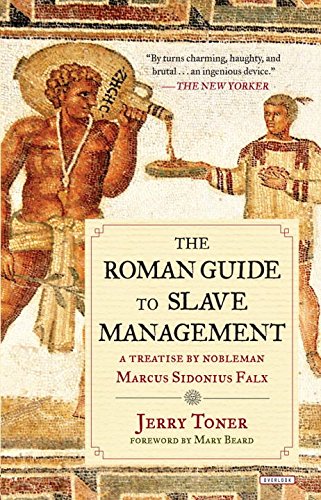
The Roman Guide to Slave Management: A Treatise

The Roman Guide to Slave Management: A Treatise


The Roman Guide to Slave Management: A Treatise


Free Download The Roman Guide to Slave Management: A Treatise

The Roman Guide To Slave Management: A Treatise. One day, you will discover a brand-new experience and also understanding by investing more money. But when? Do you assume that you require to acquire those all requirements when having much cash? Why do not you attempt to get something easy initially? That's something that will lead you to understand more concerning the world, adventure, some areas, past history, amusement, as well as more? It is your personal time to continue reading routine. Among guides you can appreciate now is The Roman Guide To Slave Management: A Treatise here.

Right here, we have numerous book The Roman Guide To Slave Management: A Treatise and collections to review. We likewise serve alternative kinds and also type of the publications to browse. The enjoyable publication, fiction, past history, novel, scientific research, and also various other sorts of publications are readily available here. As this The Roman Guide To Slave Management: A Treatise, it turneds into one of the favored publication The Roman Guide To Slave Management: A Treatise collections that we have. This is why you remain in the ideal website to see the remarkable e-books to have.

Te book is advised as a result of some features as well as factors. If you have actually found out about the writer of The Roman Guide To Slave Management: A Treatise, you will certainly be so certain that this book is extremely correct for you reading this book implies you can obtain some knowledge from this great author. When you read it consistently and perfectly, you could really locate why this publication is advised. However, when you just want to finish reading it without comprehending the significance, it will imply absolutely nothing.

When you have actually reviewed it a lot more pages, you will certainly recognize a growing number of once again. In addition when you have reviewed all finished. That's your time to constantly keep in mind and do what the lesson as well as experience of this publication used to you. By this condition, you need to know that every publication ahs various way to present the impression to any kind of viewers. But they will certainly be and also must be. This is exactly what the DDD always offers you lesson about it.

The Roman Guide to Slave Management: A Treatise

The sly, subversive, first-person, and uncompromising guide to the realities of slavery and servitude in ancient Rome, with a foreword by Mary Beard.

Having spent most of his life managing his servants―many of them prisoners from Rome’s military conquests―he decided to write a kind of owner’s manual for his friends and countrymen. The result, The Roman Guide to Slave Management, is a sly, subversive guide to the realities of servitude in ancient Rome. Cambridge scholar Jerry Toner uses Falx, his fictional but true-to-life creation, to describe where and how to Romans bought slaves, how they could tell an obedient worker from a troublemaker, and even how the ruling class reacted to the inevitable slave revolts. Toner also adds commentary throughout, analyzing the callous words and casual brutality of Falx and his compatriots and putting it all in context for the modern reader. Written with a deep knowledge of ancient culture―and the depths of its cruelty―this is the Roman Empire as you’ve never seen it before.

  • Amazon Sales Rank: #1017401 in Books
  • Published on: 2016-01-05
  • Original language: English
  • Number of items: 1
  • Dimensions: 7.80" h x .70" w x 5.00" l, .0 pounds
  • Binding: Paperback
  • 240 pages

Review “Thought provoking . . . written in a tone that feels both educated and archaically brutal . . .  [Toner’s] history and commentary provides context for the dirty institution upon which modern civilization is built.” —Publishers Weekly“By turns charming, haughty, and brutal . . . Toner, a classicist, comes up with an ingenious device.  He creates Marcus Sidonius Falx, an ancient-Roman nobleman and the imagined author of a treatise on how to buy, breed, and train a slave."  —The New Yorker“Captivating . . . Toner draws on Seneca, Pliny the Younger and various Roman chroniclers to create in Falx a credible portrait of the affluent slaveholder—smug, smart, sardonic.” —Bloomberg.com 

About the Author Jerry Toner is Fellow and Director of Studies in Classics at Churchill College, Cambridge. He is the author of The Roman Guide to Slave Management, available from The Overlook Press.Mary Beard is a Cambridge professor and author of more than a dozen books, including Confronting the Classics.

Excerpt. © Reprinted by permission. All rights reserved.

Copyright

FOREWORD

I HAVE NEVER COME ACROSS Marcus Sidonius Falx before, but I know his type. The Roman world had plenty of people just like him who owned huge numbers of slaves and who, for most of the time, did not give slavery a second thought. It was completely normal, a natural part of the social order. But the Romans did think about slaves in their own way: how they could control them, and how best to show them off to their friends. And the smarter ones (and that might include Falx here) could actually be a bit scared. They worried about what the slaves were up to behind their backs, and where the battle lines of ancient Roman culture were drawn. ‘All slaves are enemies’ ran one famous Roman slogan, well known to Falx. And on a notorious occasion in the reign of the emperor Nero, a Roman plutocrat was murdered by one of his 400 household slaves. It didn’t, as you will see, make Falx rest entirely easy in his bed, but the whole household was put to death as punishment.

I am a bit surprised that Falx and Toner got on so well. Falx is an aristocrat whereas Toner’s family – so he assures me – has its roots in those classes oppressed by the British elite (‘from an Irish potato field’ I’m told). But it is to the credit of both of them, I guess, that they seem to have hit it off, despite their political differences. Of course, there were slave owners of a very different sort from Falx, There were thousands of small traders and craftsmen who owned just one or two slaves. And very many of them were freed – and actually married those who had once been there owners, both male and female. Even in Falx’s league, there were a few favored slave secretaries and PA’s who lived better than poor free Romans trying to make a living on day labour at the docks, or selling cheap flowers in the Forum. Interestingly some of the free poor got onto the streets to demonstrate, unsuccessfully, against the (strictly legal) punishment of those 400 slaves. But Falx is talking about the use of mass slave labour.

It is hard for us now to understand all the dimensions of the relations between free, and slave, and ex-slave (and it was hard then). But we do have a few glimpses of what the rich Romans thought of their ordinary slave-workers; and Falx is one of the most reliable guides we have to what Romans would have seen as a proud tradition of ‘slave management’. He is trying to help everyone share the benefits of his wisdom, and he is a good place to learn.

Thankfully the world has moved on. But his text offers an authentic insight – as authentic as you can get – into a fundamental aspect of life in Rome and its empire. If it had been published 2,000 years ago it would have topped the management charts. Modern readers may have trouble mastering their prejudices; but underneath the buoyant rhetoric, they’ll maybe find Falx not a wholly bad man, by the standards of his day at least.

And Falx points the finger at us too. Do some of his insights still help us manage our own ‘staff’. For are we sure that ‘wage-slaves’ are really so much different from ‘slaves’? How different are we from the Romans?

Mary Beard

Cambridge, April 2014

AUTHOR’S NOTE

MY NAME IS MARCUS SIDONIUS FALX, of noble birth, whose great-great-grandfather held a consulship, and whose mother hails from an ancient senatorial lineage. Our family was given the name Falx – ‘the Claw’ – for our stubborn refusal to let anything go. I served with distinction in the Legio VI ‘Ironclad’ for five years, campaigning mostly against troublesome oriental tribes, before returning to Rome to run my affairs and my substantial estates in Campania and the province of Africa. My family has owned countless slaves for countless generations. There is nothing we do not know about the management of them.

In order to write for a non-Roman audience I have been compelled to use the services of a certain Jerry Toner, a teacher in one of our miserable northern provinces, who knows something of our Roman ways but shares few of our virtues. Indeed a man so soft I have never encountered outside the servile class: he has not once fought in battle, can scarce drink a small amphora of watered wine, and even stoops so low that he himself will clean his baby’s backside rather than leave such foul tasks to the slaves and womenfolk. He is, however, most blessed to be married to a wife of great beauty and intellect (though she is perhaps more forward with her opinions than a woman ought to be), to whom I am most grateful for ensuring that the meaning of my text is clear for you barbarian readers.

Marcus Sidonius Falx

Rome, pridie Idus Martias

COMMENTATOR’S NOTE

MARCUS SIDONIUS FALX’S existence may be the subject of academic debate, but the reality of his opinions is beyond doubt. They provide a Roman’s-eye view of slavery. Slavery was a core institution of the Roman world for the whole of its existence. It was so central that it never occurred to anyone that it might not exist. Owning slaves was as normal as voting Republican in Texas or Democrat in New York. We have to remember that slavery was seen as acceptable in the USA and Britain until only two centuries ago. Even freedom-loving Founding Fathers, such as George Washington, Thomas Jefferson and Benjamin Franklin, owned slaves themselves. Falx’s guide tries to let us understand something of the mentality of that thankfully long-gone world.

Sadly, we don’t know what the Romans’ slaves thought themselves, because their views didn’t matter. But we know plenty about what their Roman masters thought of them. The substance of Marcus’s words survives in a variety of Roman texts on slavery, although he has not followed them slavishly. These sources are often obscure or quite hard to interpret. This single text is his clear and simple manual for managing slaves the Roman way. Needless to say the fact that I have helped bring it to publication does not mean I approve of it.

Marcus has been a difficult author to work with. He holds many strong and unpalatable views which he refuses to acknowledge may be wrong or immoral. But by Roman standards, Marcus was a decent man. His text shows how the Roman world, for all its apparent familiarity, can be almost casually shocking. It also shows how complex an institution was slavery.

Marcus has refused to reveal his age: his opinions are often an amalgam of views from across the centuries, although he appears to have taken them mostly from the Empire of the first and second centuries AD. I have added brief commentaries to his words at the end of each chapter to give some context to his advice and (at least partly for the sake of my own reputation) to contradict some of his more unreconstructed views. These, with the further reading at the end of the book, will point those who are interested in digging deeper towards the underlying primary sources and modern discussions.

Jerry Toner

Cambridge, July 2014

   INTRODUCTION   

BE THE MASTER

A REMARKABLE THING happened to me in the gardens of my villa some months ago. It was an event so strange and thought-provoking that it caused me to write this book. I happened to be entertaining a guest from one of the German tribes, an Alan to be precise. You may well wonder what a man of my rank was doing playing host to a miserable barbarian, but this man was no normal German. He was a prince who had come to our great city of Rome as part of an embassy to the emperor. Tired of having to find small talk concerning the benefits of trousers, and other such tedious issues which interest their sort, our great leader had asked me to house his foreign visitor until his return to that foul swamp he calls home.

We were taking a casual walk in the extensive parterre at the back of my villa and I was explaining to my guest, in simple Latin so as not to confuse him, what various mythological heroes the many marble statues represented. Then this happened. Concentrating my attention on the statuary, I failed to notice a small hoe lying in the pathway. As I stood on the metal end, the wooden handle sprang up into my shins, causing me to cry out, more in alarm than pain. A certain slave, who was standing nearby and whose tool it was, smirked as he saw me hop about on one leg. Naturally I was outraged that this worthless idiot, a man who is himself nothing more than a tool that can speak, should laugh at his master’s mishap. I summoned the bailiff.

‘This slave thinks that injuries to the leg are amusing. Let us break his legs and see how much he laughs.’

That wiped the smile from his face. Ignoring the pitiful begging which slaves always resort to when faced with their just deserts, the bailiff and two sturdy attendants pulled the man down to the ground, while a fourth ran over with a heavy iron bar. Just as he was raising the implement above his head, my barbarian guest cried out, ‘No!’

Turning to confront him, I saw that he was as white as a freshly sulphured toga.

‘What is the matter?’

He hesitated. I pressed him:

‘Surely you would treat your slaves the same way?’

‘We do not have slaves,’ was his extraordinary reply.

Imagine that? A society without slaves! Who has ever heard of such a thing! How would it function? Who would perform the basest tasks, those that are beneath even the lowest-born free man? What would you do with all those captives acquired in wars of conquest? How would you display your wealth? With my mind turning over all these imponderable questions, I found my anger softening.

‘Please, master, I beg you …’ whimpered the slave.

‘Oh all right …’

I told the bailiff to stop and let the slave off with a light beating with rods. I know, I know, I am too soft. But so many owners today are far too quick to punish their slaves brutally for very minor offences. It is always better to count to ten before you act.

Leading my troubled guest back towards the house, it occurred to me that this German barbarian might not be alone in being unused to owning slaves. With so many in the world now addicted to vulgar equality, it became clear to me that people no longer understand how to treat their slaves and underlings properly. I decided, therefore, to set down the principles with which any free person can ensure the efficient running of their attendants.

This is a vitally important task. The man who devotes himself to personal advancement through the acquisition of power and wealth should understand everything that will help him in this endeavour. It never ceases to amaze me how many in authority today have no inkling of how best to treat those who are so fortunate as to serve them in their ambition. Instead, desperately seeking to ingratiate themselves with those whose loyalty should be in no doubt, they fawn and pander to even the lowest sort of humanity. I have even seen a leading politician smile warmly at a woman working in the street in a pathetic attempt to win her worthless support. Knowledge of how to treat the basest in society, which can be acquired from the careful study of this work, will, by contrast, provide the wherewithal to achieve glory. It will teach the means to attain the goal of a household that is fully in accord with its master’s wishes. This will provide a secure power base from which to rise in society. The book will impart the social skills with which to command those who will come to report to you as your reputation burgeons. Accordingly, any attentive head of a household, whose heart is set on pursuing a leadership role, is strongly advised to take special pains to consult my work, which is the fruit of one of the most experienced heads of the ancient past.

I believe that there is a science of how to be a master, which proves that running a household and controlling slaves is the same as being a leader in wider society. Whether leaders and masters are not also born is impossible to answer with any certainty. Some Greeks have argued that all men differ from each other according to their inner natures. Those who do manual, physical work are slavish by nature, and it is better for them to come under the control of people such as myself who are in possession of natures of a higher sort. For a man who is capable of belonging to another person is, by nature, a slave; and that is why, the argument goes, such a man belongs to someone else. Nature, they say, clearly also intended to make the bodies and souls of free men different to those of slaves. Slaves have bodies that are strong and well suited to the kind of physical services they have to do. Their souls are less capable of reasoning. The bodies of free men, by contrast, are upright and not much use for that kind of manual work. But their souls are intelligent. They are suited for the purposes of partaking in the life of the community, whether it be political or military. Of course, nature sometimes makes mistakes and the opposite happens – slaves are given the bodies of free men, free men only the souls and not the bodies of free men. But on the whole, the Greeks said, nature does not make mistakes. She makes sure that each is allotted a nature suitable to his fate in life.

But most Romans disagree with this. They believe that controlling another human being is contrary to nature. So many of us Romans who continue to rule a great empire are now descended from slaves that it would be ridiculous to believe that slaves are inherently useless. Roman thinkers argue that it is only social convention that leads one man to own another as a slave. They say that there is no natural difference between the two. It is a simple injustice, one that is based on the use of force. They also rightly point out that many slaves have acted in a brave and noble way during times of great crisis, which shows that they are not all slavish by nature. And if slavery is not natural then neither is being a master. It must be learnt!

Rome is full of slaves. I have heard it said that as many as one in three or four of the inhabitants of the Italian peninsula are in servitude. Even in the vast expanse of the empire as a whole, whose population cannot fall far short of 60 or 70 million persons, perhaps as many as one in eight is a slave. Nor are these slaves only to be found in the rural areas. Rome is teeming with every kind of slave activity and its servile population is as high as anywhere. Perhaps a million live in the capital city, and some claim that at least a third of them are slaves. While such estimates represent little more than the informed guesswork of those with overactive imaginations, it tells you how important an institution slavery is for the Roman world. We Romans need our slaves.

You may well ask how this situation came about. What were the advantages in using slaves instead of free labour? Let me explain. In the past, during the republic, whenever the Romans had conquered a region of Italy, they took part of the land for themselves and populated it with Roman settlers. They intended these colonies to act as garrison towns. But much land was left empty and unfarmed as a result of the fighting. This was either because the owners had been killed or had fled while fighting in the army against us Romans. The senate proclaimed that anyone who wanted to farm this land could do so in return for a payment of 10 per cent of the annual harvest of cereal crops and 20 per cent of the fruit crops. The aim was to increase the population of Italy, who would, by dint of their hard work, produce more food for cities and also act as soldiers to fight for Rome in times of war.

Such fine intentions! But the result was the very opposite of what they sought to achieve. What happened was that the rich got hold of most of that land which was not distributed as allotments, and, once they had grown used to owning this land and felt comfortable that no one would snatch it back from them, they persuaded the poor peasants who owned smallholdings next to their own to sell them. Or, if the peasants refused, they sometimes simply seized the land violently. There was nothing that a poor farmer could do to defend himself against such a powerful neighbour, often because he was himself away on active service. Bit by bit, the large holdings grew until they became vast estates instead of simple farms. The estate owners did not want to rely on the very farmers they had dispossessed to farm their land, nor did they wish to employ free men to labour for them since they would almost certainly be called away at some point to serve in the army. So they bought slaves and relied on them. This proved to be a very profitable exercise, in particular because the slaves bred and produced many children. And the beauty of it was that none of these slaves was liable for military service, since the army naturally cannot rely on slaves to serve in defence of the state. The estate owners became extremely wealthy. At the same time, the number of slaves grew rapidly. But the number of Italians became fewer and those few that there were grew poorer, oppressed as they were by taxes and by the burden of long military service. Even during those brief periods of leave when they were not on military service, the freeborn could find no work because the land was owned by the rich and they used slaves to work it instead of free labour.

Naturally, the senate and the Roman people grew anxious that they would no longer be able to call upon enough Italian troops and that this great body of slaves would destroy their masters. But they could also see that it would be neither easy nor equitable to take these huge estates away from their owners, since they had been in their possession now for generations. How do you dispossess a man of a tree that his grandfather planted with his own hand? Some of the tribunes of the people brought in laws to try to limit the size of such estates and force the great landowners to employ a certain proportion of free men. But no one took any notice of these laws. As to the threat of slaves, the worry was not so much that they would revolt, but that they would eradicate the freeborn peasant, on whom the Roman elite relied to serve in the army and keep them in power. So it was decreed that no citizen over twenty years of age and under forty should serve in the army outside of Italy for more than three years at a time in order to give them a chance to keep control of their smallholdings at home.

Thankfully, the slave owner today need not trouble himself with such concerns. The army is now professional and it is many, many years since there has been a great slave revolt. Today’s slave owner needs to worry only about keeping control of his own household. These are matters that I picked up at my father’s knee. As a lad, I learnt to command authority, issuing my string of attendants with their orders: ‘Bring me my cloak!’, ‘Wash my hands!’, ‘Serve me my breakfast, boy!’ were the commands that punctuated my daily life. And as a callow youth, my father taught me how to instil respect into even the most recalcitrant slave.

The household is the cornerstone of society and, indeed, all human life. No kind of civilised existence is possible at all without the acquisition of the basic necessities that the household provides. But a household is just a house if it has no slaves. To be sure, a family needs a wife and children. Indeed, we can profit from their work. But it is the slaves who provide the bulk of the services. This is particularly beneficial because it means the master of the household does not have to rely on outsiders to provide those services. We all know how degrading it is to have to ask others for help and how tiresome to bring in external contractors to do jobs for us. They never turn up when instructed to, take liberties with their fees, and, taking little pride in their work, carry out their tasks shoddily. With slaves, however, we can be sure that work will be carried out in just the way that we want it to be done. The slaves, therefore, turn the family unit into a much more significant unit, that is to say, the household.

The household is like a miniature version of the state itself, with its own structure, hierarchy and leadership and its own sense of community. Husband/wife, father/son, master/slave are the basic building blocks of social life. As such, slavery is one of the key principles of social organisation. The slave is at the complete disposal of the master of the household, in the same way that the citizen must obey the commands of the state. But slavery is a state of absolute subjection. The slave has no kin, he cannot assume the rights and obligations of marriage, his very identity is imposed by the owner, who gives him his name. Slavery is the same as social death in this respect. Complete submission is expected. Regrettably, slaves sometimes have to be coerced and worn down into obedience. Their spirit has to be broken. It is for this reason that some of the prouder tribes refuse ever to surrender when defeated in battle. The Cantabri in Spain, for example, killed themselves after the failure of their revolt rather than suffer enslavement.

All slaves share the same lack of legal rights. But we should not assume that they only perform tasks that are beneath the free man. In fact, as we shall also see, many slaves have acquired positions of influence on account of the power of their masters. Equally, many poor free men have to carry out the most loathsome tasks in order to put bread before their families. Slaves are also used to carry out a bewildering array of tasks. Whether it is the old retainer keeping watch on the front door, or the young boy serving water at table, or the comely slave girl attending in the bed-chamber, slaves carry out a wide variety of jobs within a large household that minister to the master’s every need.

My father taught me what slaves were also for – showing off! Slaves may be morally worthless, mere things and possessions, but despite this they confer high status upon their owners. In the same way that a fine horse reflects well upon its rider, so a well-mannered and deferential slave highlights the merits of its owner. And if there are four hundred of them in the household, then how much greater is the glory which is displayed! Who but the highest in society can afford to maintain so impressive and prestigious a retinue?

For slaves might be dullards but they serve the noblest. If you want to learn how you too should treat those slaves who accrue to you as your good fortune grows, then read on. For however much the practice of your own times is at variance with the principles of the ancient world, that should not discourage you from learning from them. For in the works of the ancients far more is to be found to merit your approval than your rejection. Read and learn.

   COMMENTARY   

The story that the Alan tribe did not have slaves shows how remarkable such a fact was to a Roman writer. The fourth-century AD historian Ammianus felt it was worth recording precisely because it would have struck his Roman audience as curious at best. There are no examples of Romans arguing that slavery should be abolished. It was a simple fact of social life, in the same way that owning a car or a cat is today. Wealthy Romans saw slaves as being necessary for a high standard of living, just as we view modern domestic appliances. Slaves did all the things that you would not want to do yourself – washing, cleaning, even wiping your backside – as well as providing a whole range of other services. But not all slaves were alike. There was a big difference between domestic slaves in the city and the slaves working in the fields. Urban slaves were as much about status as efficiency, in much the same way as are many modern household possessions (do we really need that 100-inch plasma TV?). Even country slaves may not always have been kept primarily for economic reasons, even though their roles were crucial, especially in the large estates of the rich.

The Greeks held a stronger view of the nature of slaves than did the Romans. Aristotle famously argued that slaves were naturally slavish, and it was right for them to be owned by the superior Greeks. Athenian society maintained a strong divide between citizen and slave, which made it difficult for slaves to be assimilated into society even when they were freed. A completely different model operated in Rome, where large numbers of outsiders were habitually assimilated into its ranks of citizens. One of the main reasons for Rome’s great success was its ability to incorporate all manner of foreigners and their gods. This allowed it to expand its pool of manpower along with its territory. In such a society, it made no sense to exclude slaves permanently from becoming Roman. Instead it seemed more sensible to think of slavery as a temporary state, after which, if the right attitude had been shown, a slave could achieve Roman citizenship. Somewhat surprisingly, Roman slavery was as much about social mobility as structural rigidity.

Slaves had few legal rights in Roman law but this was not adhered to rigorously, especially in urban households. It was usual for city slaves to be allowed to own money and possessions, even if this peculium legally remained the property of the owner. Although slaves could not marry, in practice they were often allowed to form partnerships. They acquired more legal rights during the empire: for example they could appeal to the emperor’s statue for sanctuary from an abusive master. But this increased level of imperial interest did not mean that the emperors wanted to improve slaves’ conditions. As supreme leaders, they simply came to interfere in all kinds of issues. People looked to them to provide guidance and rulings about what was legally acceptable in all manner of domestic matters.

Numbers regarding the quantity of slaves in the Roman world need to be treated with caution. They are informed guesses at best. The surviving evidence is poor and also pretty thin. You can find discussion of the numbers and degree of social mobility of slaves in Roman Italy in Walter Scheidel’s ‘Human Mobility in Roman Italy, II: The Slave Population’, in the Journal of Roman Studies, 95 (2005), 64–79, and ‘The slave population of Roman Italy: speculation and constraints’, in Topoi, 9 (1999), 129–44.

For the story that the Alans were notable for not having any slaves, see Ammianus Marcellinus 31.2.25. Seneca complains that owners who get angry are too quick to punish their slaves with whippings and by having their legs broken for very minor offences such as answering back or giving them cheeky looks: see On Anger 3.24 and 32. The explanation for Marcus’s aims of this book is based on the preface of Columella’s work, On Agriculture. The legal status of slaves can be found in the Digest 1.5. Aristotle Politics 1.2 contains the discussion about the household, slaves as tools, and whether slaves are so by nature. For the ancient analysis of why slave numbers increased in Italy, see Appian, Civil Wars, 1.1; this can be usefully compared with the modern analysis of Keith Hopkins in the first chapter of his Conquerors and Slaves.

   CHAPTER I   

HOW TO BUY A SLAVE

IF A SCULPTOR WISHES to make a great work of art he begins by searching out the piece of stone that most perfectly suits his purpose. So too the slave owner must realise that it is only from the right kind of human material that he can ever hope to fashion slaves who display the desirable characteristics of cheerfulness, hard work and obedience. It is vital that he takes the greatest care in selecting the best slaves in the market, ensuring that they are free from defects, whether physical, mental or moral. Here I shall instruct you how best to go about the difficult task of buying a slave.

Firstly, the where. Many will tell you to go to the Roman forum, behind the temple of Castor, but you would do well to ignore their advice. Only the lowest and roughest sorts of slave are offered for sale there. Far better are those to be found from the slave traders who operate in the Saepta Julia, close by the Pantheon. This is particularly so if you are seeking to buy a soft boy, or something from one of the more exotic regions of the empire or even beyond, from such places as Ethiopia. All of these are to be found among the traders there, although you must be sure to ask them directly if they have anything special tucked away in the back of their shops. They always keep their best hidden from public view so as to retain them for their premium customers. You will have no trouble finding a castrated boy there too, if that is your desire, even though the law in theory prohibits such a trade.

Legally speaking, slaves are either captives from war or descended from female slaves but in reality there are other avenues into servitude. Some of the destitute illegally sell themselves into slavery to clear debts, or they might sell one of their children to help feed the remaining offspring. It is common practice for people to abandon unwanted babies at the rubbish dump on the edge of town and people sometimes raise these abandoned infants as their own slaves, even though such children technically remain freeborn. It is also to be suspected that slave dealers often buy their wares from traders who have simply kidnapped their goods, using pirate raids to snatch adults and children from far-flung coastal regions.

The Roman Guide to Slave Management: A Treatise PDF
The Roman Guide to Slave Management: A Treatise EPub
The Roman Guide to Slave Management: A Treatise Doc
The Roman Guide to Slave Management: A Treatise iBooks
The Roman Guide to Slave Management: A Treatise rtf
The Roman Guide to Slave Management: A Treatise Mobipocket
The Roman Guide to Slave Management: A Treatise Kindle

The Roman Guide to Slave Management: A Treatise PDF

The Roman Guide to Slave Management: A Treatise PDF

The Roman Guide to Slave Management: A Treatise PDF